
Vítejte zpět u China Insights Weekly. Here are some of the highlights of this release:
- China shrinks lead in AI, leads in publications, citations, patents and model dynamics
- Max Planck expands activities in Beijing, adding new centres for climate and synthetic biochemistry
- China leads in chemical discovery, now produces 41 % newly reported substances
- Chinese bonds attract record trading, as foreign investors seek exposure to yuan-denominated assets
Main News
Chinese robots break human world record at Beijing half marathon
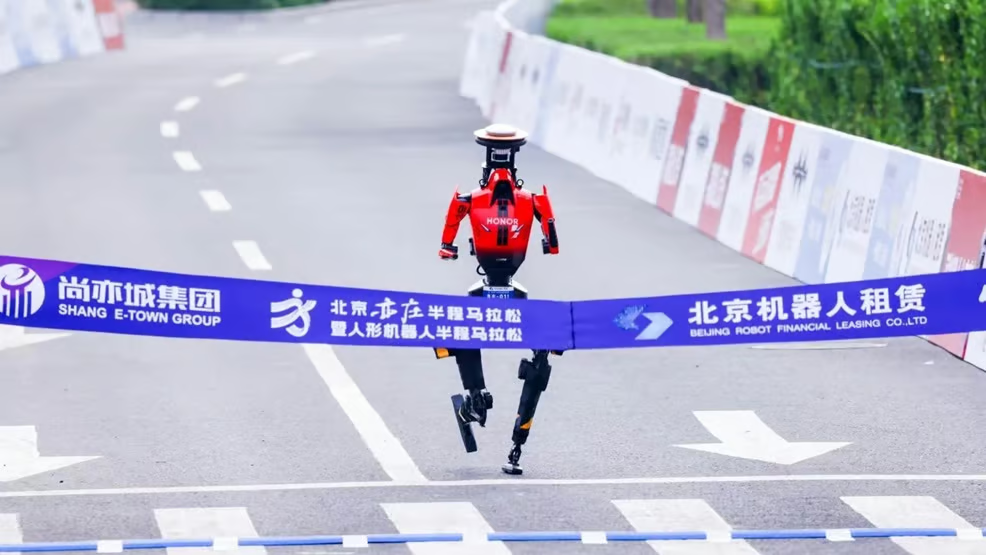
A humanoid robot from smartphone maker Honor won the Beijing Robotic Half Marathon on April 19 with a time of 50 minutes and 26 seconds, breaking the human world record recently set at 57:20. The number of participating teams grew from 20 last year to more than 100 this year. Nearly half of the robots, including the winner, completed the 21km course autonomously, a significant improvement on 2025, when most did not finish the race. Honor took all three places on the podium, with the winning robot having legs 90-95cm long and using liquid cooling technology taken from smartphones. Last year's winner finished the race in 2 hours and 40 minutes. The race shows China's rapid progress in humanoid robotics.
Kering acquires stake in Chinese fashion group Icicle and bets on its global growth
French luxury giant Kering will acquire a minority stake in Icicle Carven China France (ICCF), the global operating entity of Chinese fashion group Icicle, as part of its „House of Wonders“ initiative, which supports emerging luxury brands with strong cultural relevance. Founded in 1997, Icicle acquired French brand Carven in 2018 and merged into ICCF three years later; the group is based in both Paris and Shanghai. Despite a shrinking fashion industry, Icicle has achieved double-digit compound annual growth in recent years, with global sales exceeding 300 million euros ($324 million) last year and more than 200 stores worldwide. The brand opened a design centre in Paris in 2013 and its first boutique in 2019, now operates five stores in Europe and has been part of the Paris Fashion Week programme since last year.

Two new Max Planck centres strengthen research partnership with China
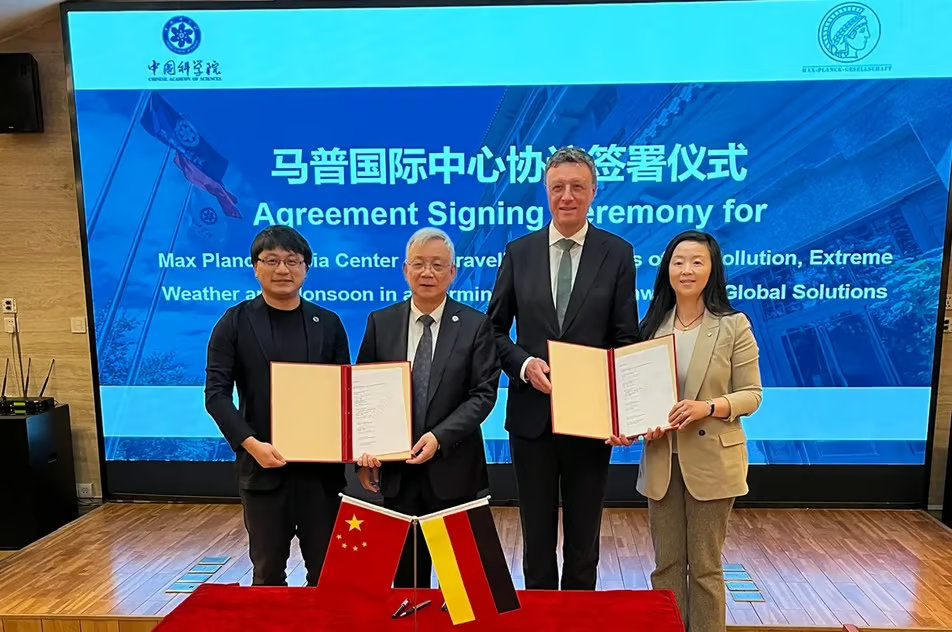
On 13 April 2026, the German independent non-profit research organisation Max Planck Society and the Chinese Academy of Sciences (CAS) opened two new Max Planck Centres in Beijing, extending a 50-year research partnership. The MAC-Air Centre investigates the interactions between air pollution, extreme weather and climate using the 325-metre Beijing Tall Tower Observatory and the EarthLab supercomputing infrastructure. Partners include Tsinghua University, Nanjing University and institutions from India, South Korea and Finland. The Centre for Synthetic Biochemistry, jointly led by the Max Planck Institute for Terrestrial Microbiology and the Shenzhen Institutes of Advanced Technology (CAS), focuses on natural products of microorganisms for medicine and crop protection. Researchers will gain access to the synthetic biology infrastructure in Shenzhen for cultivation, analysis and scale-up. Both centers emphasize joint training and exchange programs for early-career scientists.
China „nearly erases“ America's lead in AI, leads in publications, citations and patents
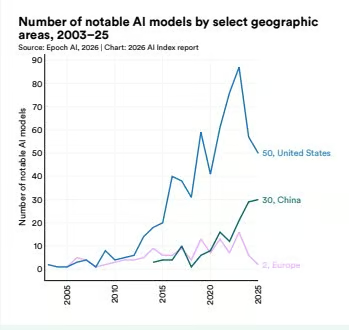
Podle zprávy Stanford AI Index Report 2026 China has become a dominant force in AI research and development, leading in global publication volume with 17.8 % of AI articles in 2024 and gaining 20.6 % of all AI citations. Chinese institutions created a total of 30 major AI models in 2025, just behind the United States with 50 models, with Alibaba releasing 11 models and DeepSeek contributing 4. China now holds 74.2 % of globally granted AI patents (97,990 in 2024). The performance gap between the US and Chinese models has effectively closed, with DeepSeek-R1 briefly matching the top US models in February 2025 and trailing Anthropic's top model by only 2.7 % as of March 2026. China has 449 AI data centers (fourth in the world) and its share of the top 100 most cited AI articles has grown from 33 in 2021 to 41 in 2024, with Tsinghua University among the most productive AI research institutions in the world.
China dominates the discovery of new chemicals and reactions
China is now discovering more than 41 % of new chemicals and reactions reported in the scientific literature, up from less than 1 % in the early 1990s. By comparison, the US share has fallen to 11 % from about a quarter in previous years, according to a new analysis of data from 1996-2022. China leads in organic compounds (40 %), rare earth-based materials (40 %) and organometallic compounds (17 %, the most in the world). More than 90 % of China's contributions come from domestic research, not from international collaborations. According to the Nature Index, the top ten institutions by number of high-quality applied research papers were all from China. In 2024, China surpassed the US for the first time in R&D spending (in PPP terms): $1.03 trillion versus $1.01 trillion, with annual growth of over 14 %. The 2008 financial crisis marked the beginning of the US decline, while China's growth remained unaffected.

Tomáš Kučera & Yereth Jansen
China-insights.com/gnews.cz – GH