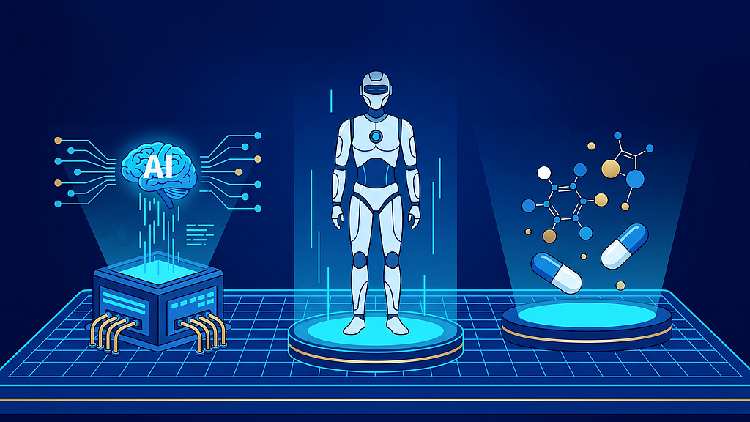
The structure of Chinese exports is rapidly transforming, with a new generation of technologically advanced products becoming a significant driver of the country's foreign trade.
While electric vehicles, lithium batteries, and solar panels were previously referred to as China's export "new trio," in the first half of this year, robotics, artificial intelligence, and innovative pharmaceuticals began to gain prominence. These sectors, dubbed the new "new trio," are gradually becoming the latest pillars of Chinese exports.
According to experts, this shift reflects a fundamental transformation in the factors underpinning the competitiveness of Chinese exports.
"The original 'new trio' was based primarily on manufacturing," Peng Yazhe, a digital economy expert at the China Galaxy Securities research institute, told the 21st Century Business Herald. "The competitive advantage went to those who could achieve large-scale production and reduce costs."
The new "new trio," he says, follows a completely different industrial logic. These are knowledge- and technology-intensive sectors whose competitive advantage stems from long-term research, development, and continuous technological improvement. Value creation is thus shifting from traditional production factors toward innovation-driven growth.
Artificial intelligence expands its global reach
The influence of China's artificial intelligence sector is no longer limited to the export of software products.
According to the global platform OpenRouter, which aggregates AI models, Chinese large language models processed 36.11 trillion tokens during the third week of July. Compared to the previous week, this represented an increase of more than 30 percent. Chinese models have ranked first in the world in weekly usage for twelve consecutive weeks.
Experts note that AI exports today encompass a wide range of digital capabilities, from algorithm development and model deployment to applications based on autonomous AI agents. These services are often difficult to capture in traditional foreign trade statistics.
According to the article, Chinese artificial intelligence technologies are already being used by customers in 141 countries and regions.
Robots move from exhibitions to real-world operations
Chinese robots are also building an increasingly strong presence in foreign markets. They are gradually transitioning from demonstration technologies to practical use in industry and services.
In factories, industrial robots can tighten a screw in just five seconds, with their speed and precision surpassing that of experienced workers. In the energy sector, robots are used to repair transmission lines at great heights, reducing the need for dangerous manual labor.
Service robots are also becoming increasingly sophisticated. At exhibitions, they can understand spoken instructions, navigate independently, and deliver requested items. In smart pharmacies, robots from different manufacturers can share a common AI platform and collaborate in sorting medications. According to the article, this opens the way for continuously operating, unmanned pharmacies.
Trade data also confirms the sector's rapid growth. Exports of cleaning robots and intelligent bionic robots reached 18.09 billion yuan, approximately 2.7 billion dollars, in the first half of 2026.
The export value of industrial robots was 6.29 billion yuan, up 18.6 percent year-on-year. Chinese industrial robots were exported to 141 countries and regions.
Exports of surgical robots increased 3.3 times to 480 million yuan. The number of countries and regions receiving these devices expanded from 23 to 49.
Innovative pharmaceuticals gain recognition worldwide
China's pharmaceutical industry, focused on innovative drugs, is also beginning to significantly influence global competition.
China became the first country this year to approve a selective orexin 2 receptor agonist for the treatment of narcolepsy — a rare neurological disorder that causes excessive daytime sleepiness. The drug is now awaiting approval in the United States, Japan, and the European Union.
China's National Medical Products Administration approved 38 first-class innovative drugs in the first half of the year. Eleven of them represented globally new drugs based on new targets and mechanisms of action. All were independently developed by Chinese pharmaceutical companies.
By comparison, eleven similarly globally innovative drugs were approved throughout the entire year of 2025, with Chinese companies contributing to less than half of their development.
The granting of licenses to foreign partners has also accelerated significantly. The value of international licensing agreements reached approximately 110 billion dollars in the first half of the year, equivalent to 80 percent of the total value of such transactions for the entire year of 2025.
The agreements covered ten therapeutic areas, including oncology, metabolic diseases, immunology, and neurology. Buyers came from twenty countries and regions, including the United States, the United Kingdom, France, and Italy.
China now accounts for approximately 30 percent of all innovative drugs being developed worldwide, ranking second in this indicator.
From exporting products to exporting entire technological systems
Zhu Keli, founder and dean of the China New Economy Institute and an expert in intelligent economics, stated that the rapid development of all three sectors was supported by coordinated state policy.
China's national "AI Plus" action plan, together with specialized measures for the robotics industry and the digital transformation of the pharmaceutical sector, has, according to him, replaced fragmented sectoral measures with a more integrated support system.
"These three sectors have broadly shifted from exporting products to exporting technological systems, clinical solutions, and industrial operating models," said Zhu. "This demonstrates China's growing competitiveness in the most advanced technologies."
A few decades ago, Chinese exports of clothing, furniture, and household appliances demonstrated the country's manufacturing capabilities. Today, artificial intelligence, robotics, and innovative pharmaceuticals represent a new force in the Chinese economy.
China is no longer exporting only finished products, but also technologies, industrial know-how, and solutions designed to address global challenges and improve people's lives. The growing importance of the new "new trio" thus simultaneously reflects China's transition from a global manufacturing powerhouse to an innovation-driven economy.
gnews.cz/CMG