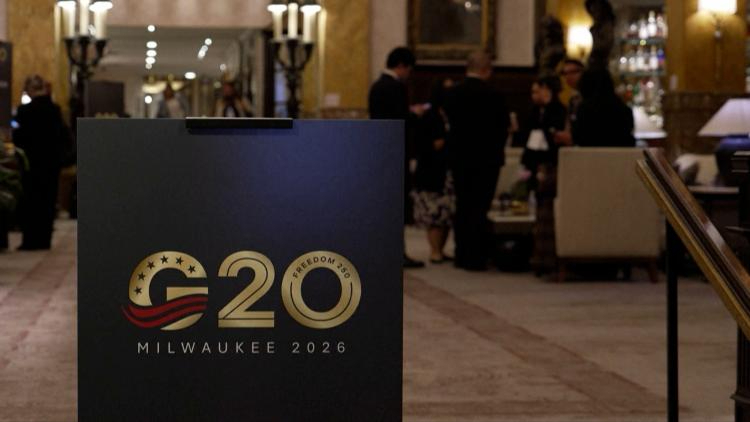
From September 30th to October 1st, a meeting of trade ministers from the G20 countries was held in Milwaukee, USA. The meeting was attended by trade ministers or their representatives from the G20 countries, as well as representatives from the host country, Poland.
The participants discussed several topics proposed by the United States. These included preventing the use of food as a tool for coercion, the issue of excess production capacity, the elimination of forced labor, and adjustments to the principle of most-favored-nation status.
A joint statement was only possible on the issue of food. No final document was produced on the other topics.
China calls for support for multilateralism
The meeting was also attended by Li Chenggang, China's international trade negotiator and Deputy Minister of Commerce.
In his speech, he recalled that Chinese President Xi Jinping emphasizes the need for the G20 to support the building of an international consensus in the areas of economics and trade, and to contribute to improving global governance.
Li Chenggang stated that in a time of increasing unilateral approaches, members of the G20 should support multilateralism and a multilateral trading system based on the World Trade Organization.
He also called for the protection and strengthening of the principle of most-favored-nation status, which he described as one of the fundamental pillars of the global trading system.
Food security and supply chains
Li Chenggang also addressed the issue of food security.
According to him, food security is directly related to the survival of populations and the stability of states and societies.
China, he said, actively contributes to global food security, and G20 members should reduce trade barriers and jointly protect the stability and smooth functioning of global food supply chains.
Emphasis on jobs and workers' rights
The Chinese official also stated that China has long been committed to people-centered development and pays attention to protecting the rights and interests of workers.
He called for further development of trade potential, the creation of quality jobs, and ensuring that the benefits of economic growth are accessible to a wider range of society.
Dispute over excess production capacity
On the issue of production capacity, Li Chenggang said that it should be assessed comprehensively, objectively, and dynamically from a global perspective.
According to him, individual countries should strive for cooperation rather than confrontation.
China, he said, is ready to engage in dialogue with other countries on industrial policies, strengthen coordination, and promote healthy and sustainable development of the global industry.
At the same time, he stated that China rejects the use of issues such as excess production capacity or forced labor as a pretext for unilateral and protectionist measures.
Bilateral meetings with several delegations
During the meeting, Li Chenggang held bilateral meetings or brief discussions with representatives from the United States, the European Union, Saudi Arabia, Russia, Brazil, Canada, Mexico, Argentina, Australia, South Korea, and Poland.
CMG