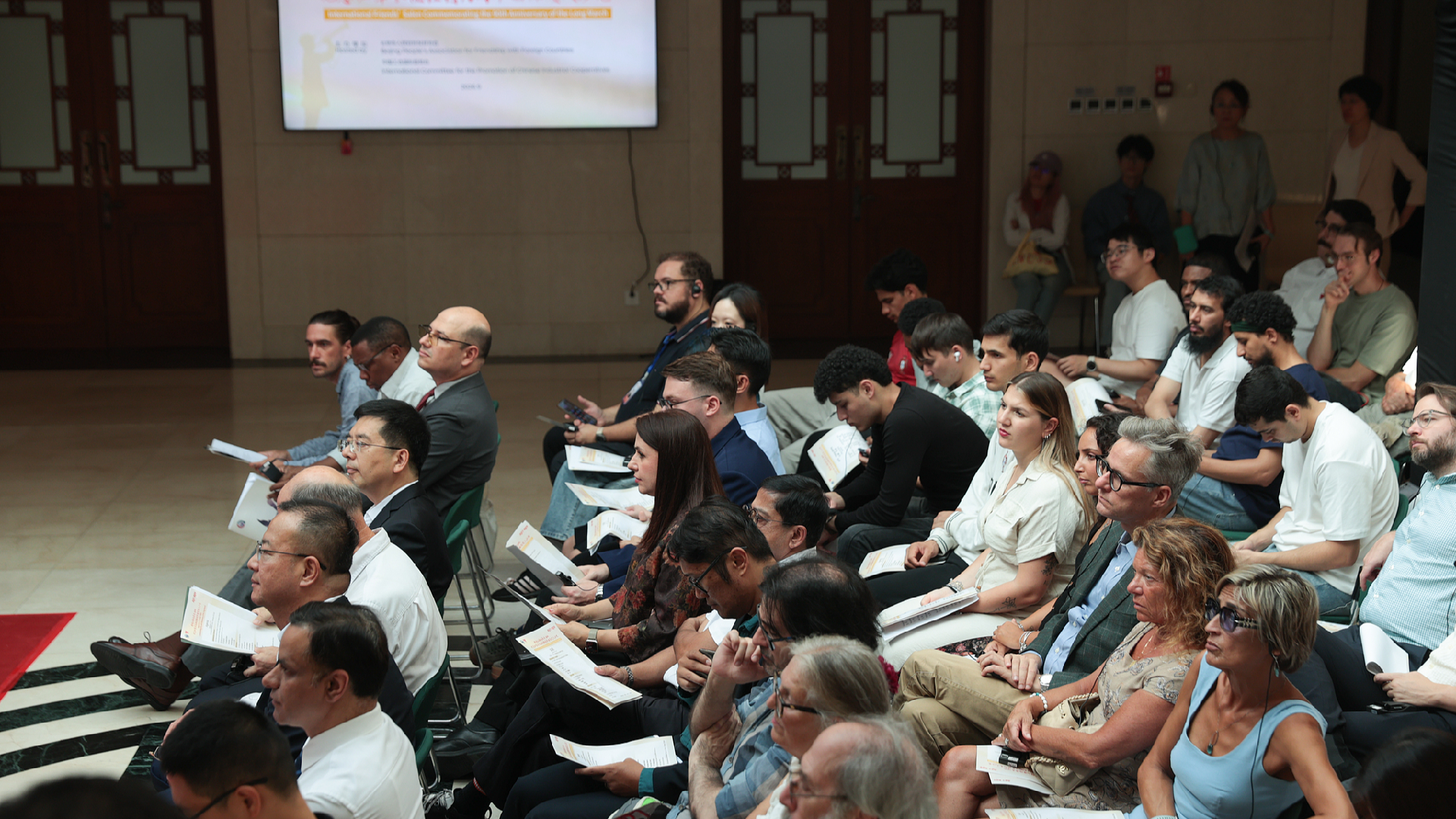
The Long March, which ended 90 years ago, is not just a chapter in Chinese revolutionary history, according to CGTN commentator Wang Zhao. In his commentary, he emphasizes the qualities that the journey required – perseverance in difficult conditions, the ability to change direction, a willingness to cooperate, and the belief that even very ambitious goals can be achieved through sustained effort.
According to Wang Zhao, these principles transcend national and historical boundaries and can be relevant to addressing current challenges, from poverty and climate change to building peace.
Wang Zhao points out that foreign journalists, historians, and travelers have been interested in the Long March for decades.
In 1937, American journalist Edgar Snow's book
Later, American journalist Harrison Salisbury personally retraced part of the route and published the book
In 2002 and 2003, British travelers Ed Jocelyn and Andy McEwen also traveled the route, later describing their experiences in the book
According to the author, this originally Chinese historical event has gradually become a topic of intercultural exchange.
One of the themes that Wang Zhao connects with the Long March is the belief that people themselves can be a source of strength.
According to him, the Red Army during the march relied heavily on local communities, which provided food, information, guides, and other support. He draws a broader principle from this, stating that long-term development cannot be achieved solely through top-down assistance, but also through the involvement of the people themselves.
As a current example, he cites Rwanda, where Chinese agricultural technology
According to the article, these projects combine technological assistance with practical training and the involvement of local residents. They have contributed to the development of mushroom production, the creation of jobs for women and young people, and the acquisition of more stable incomes for local families.
Another principle that Wang Zhao connects with the legacy of the Long March is the ability to adapt to specific situations rather than using uniform and unchanging solutions.
According to him, this approach is also relevant to addressing climate and environmental problems.
In Africa, Chinese research institutions have collaborated with the United Nations Environment Programme on projects related to the
In Ethiopia, the collaboration included demonstrations of better pasture management, soil and water conservation, and technical education to help pastoral communities improve their living conditions and increase their resilience to drought.
According to the author, environmental restoration cannot be carried out according to a single, universal model. He argues that different ecosystems, communities, and economic conditions require different solutions.
The third area mentioned in the commentary is international cooperation in promoting peace.
Wang Zhao cites Lebanon in 2020 as an example, where Chinese and Cambodian engineers working within the United Nations Interim Force in Lebanon jointly cleared more than 14,000 square meters of landmine-infested areas and destroyed 1,348 anti-personnel mines.
The author notes that removing landmines alone does not resolve the political conflicts that led to their placement. However, it protects human lives, restores access to land, and allows local communities to return to normal life.
It is precisely such concrete actions, according to him, that give practical meaning to concepts such as solidarity, responsibility, and peace.
The legacy is not only in history
Wang Zhao concludes that the value of the spirit of the Long March is not determined by the rhetoric itself, but primarily by the actions it can inspire.
Therefore, he does not consider its lasting legacy to be simply a reminder of the people who overcame an extremely challenging journey 90 years ago.
According to the author, the Long March can also serve as a reminder that complex paths to peace, development, or a more sustainable future require perseverance, cooperation, and a shared belief in the possibility of progress.
CMG