
Welcome back to China Insights Weekly. Here are some of the key takeaways from this edition:
- Chinese universities dominate global research rankings, increased funding yields results
- China's growth in service exports, digital and ICT lead the way
- Sharp growth in electric vehicle exports, Europe's share is increasing
- Energy storage companies expand overseas, global orders accelerate
Top Stories
Alibaba is behind the viral AI video model topping global rankings
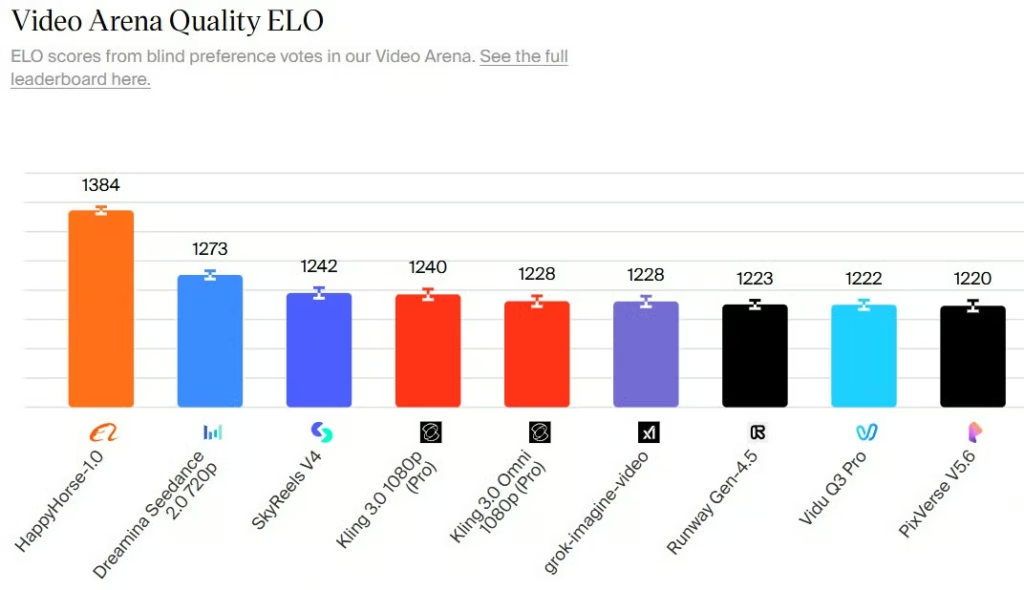
Alibaba has confirmed that it is the creator of HappyHorse-1.0, an AI-powered video generation model that anonymously appeared around April 7th on the Artificial Analysis platform and quickly rose to the top of the rankings in blind tests for both text-to-video and image-to-video conversion. Developers, through a newly created account on the X network, stated that the project belongs to Alibaba's ATH AI Innovation Unit and is still under development. The revelation comes at a time of increasing competition in China's AI sector – OpenAI recently ended its Sora application, and ByteDance has paused the rollout of Seedance 2.0 due to copyright disputes with Hollywood studios. All models in the Video Arena Quality ELO ranking are from Chinese companies.
Chinese universities continue to dominate global high-impact research
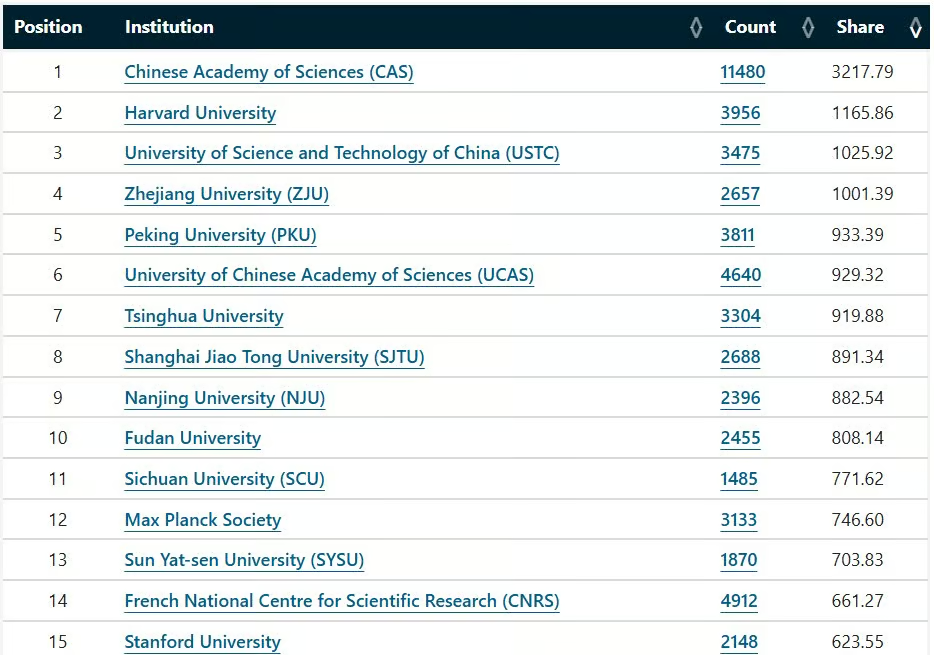
The Nature Index 2026, published on March 25th and covering the period from January 2025 to December 2025, confirms China's leading position in scientific research. The number of publications increased by 24.5% year-on-year. Nine of the top ten institutions worldwide are Chinese, including the Chinese Academy of Sciences (11,480 articles). Among universities, the University of Science and Technology of China ranks second with 3,475 articles, just behind Harvard University (3,956), followed by Zhejiang University, Peking University, and the University of the Chinese Academy of Sciences. China dominates in chemistry, physics, and earth sciences, while the United States maintains its lead in health sciences. This growth is supported by strategic investments: China plans to increase funding for science by 10% in 2026, with "Double First-Class" universities receiving approximately 1 billion yuan annually, and more than 12.7 million PhD graduates are expected this year.
McDonald's and KFC are rapidly expanding in rural China through local partnerships
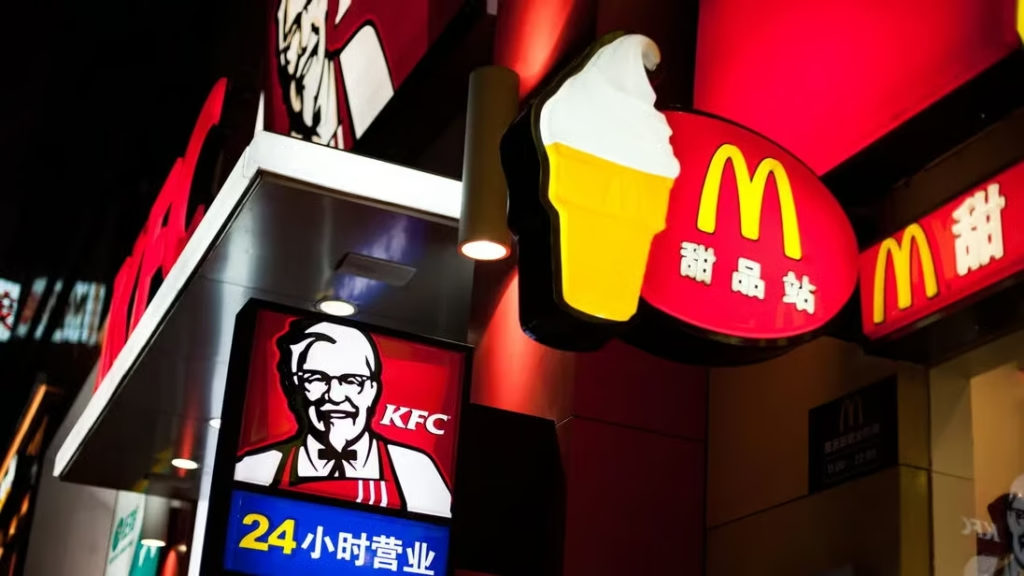
Western fast-food chains are aggressively expanding into rural areas of China as urban markets become saturated. McDonald's plans to open 3,000 new restaurants over the next three years, adding to its existing 7,000, while KFC aims to add more than 4,000 to its network of 12,600 restaurants. Approximately two-thirds of the Chinese population lives outside the 50 largest cities, representing untapped potential. However, the market is highly saturated: approximately 70% of KFC restaurants and 60% of McDonald's restaurants are within a 10-minute bike ride of another location. This expansion strategy is enabled by changes in ownership structure – McDonald's China is majority-owned by state-backed Citic Capital, while KFC and Pizza Hut operate under Yum China, which was spun off in 2016 and is traded on the NYSE and HKEX. Starbucks and Burger King are following a similar path, partnering with Chinese investors who provide capital and local expertise for smaller cities.
China is expanding the export of knowledge-intensive services
China is rapidly climbing the global rankings of exporters of knowledge-intensive services, moving from 17th place in 2014 to 6th place in 2024 in the area of digitally delivered services, according to the WTO. Exports of ICT services reached $100 billion in 2024, surpassing traditional exports such as toys ($82 billion) or footwear ($51 billion). Exports of "other business services" reached $113 billion, exceeding iron and steel ($71 billion) and even apparel ($85 billion). Exports of construction services amounted to $34 billion. This growth is a result of the Belt and Road initiative and the digitalization of exports of manufactured goods, where products such as electric vehicles, robots, and solar panels also include software and technical services. The surplus in the "other services" category exceeded $80 billion in 2024, placing China behind only the United States, the United Kingdom, and India.
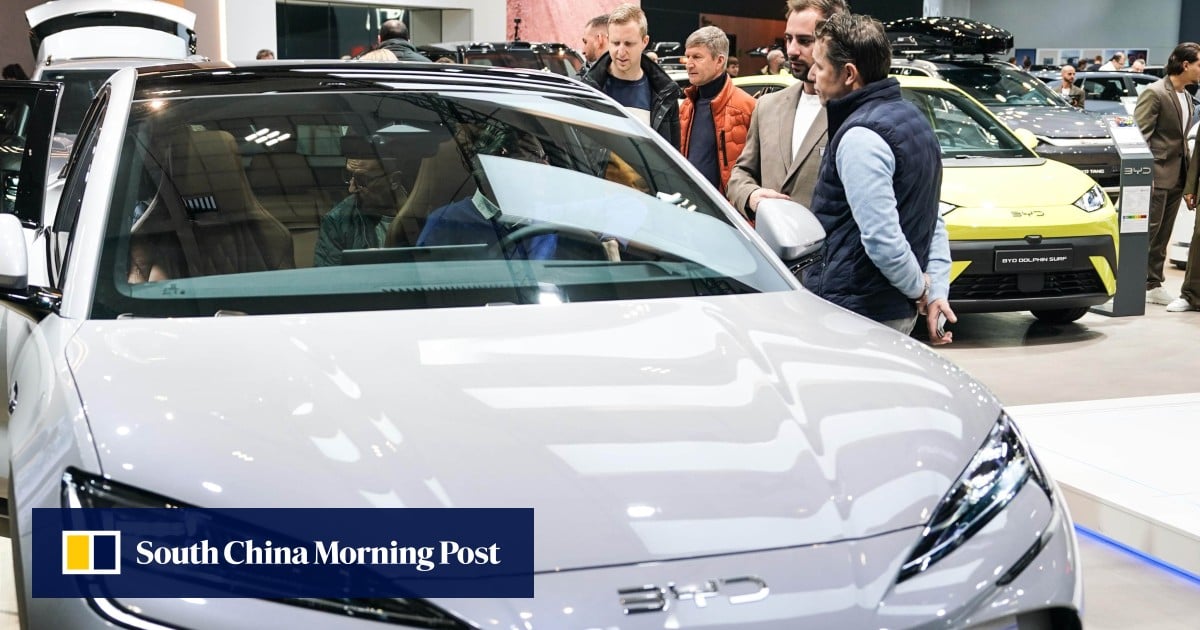
Electric vehicle and hybrid exports from China increased by 140% year-on-year in March to a record 349,000 units, driven by rising fuel prices due to the conflict with Iran. BYD accounted for approximately one-third of the exports, while Geely and Chery are also major exporters. This trend reflects a shift in consumer preferences towards electric vehicles, similar to the oil shocks of the 1970s. Tesla's deliveries from Shanghai increased by 9%, although sales in China fell by 24%, while domestic sales of BYD fell by more than 40%.
Chinese automakers are rapidly gaining market share in Europe at the expense of Japanese and South Korean competitors. Imports of Chinese vehicles into the EU are expected to exceed one million units for the first time in 2025, an increase of 30.7% year-on-year to 1.006 million vehicles, while the value of imports increased by only 4% to €13.7 billion, suggesting lower prices. Chinese cars now account for 7% of sales in the EU (compared to 5% in 2024). In February, BYD surpassed Tesla in Europe in terms of registrations for the second month in a row. Exports of passenger cars from the EU to China, on the other hand, fell sharply by more than 40%. China produced nearly 30 million vehicles in 2025, representing more than 62% of global production.

Tomáš Kučera & Yereth Jansen
China-insights.com/gnews.cz – GH