Discover the shocking truth about the CIA technique known as "Alice in Wonderland" – a disorienting interrogation method borrowed from L. Ron Hubbard of Scientology, now being used by social media algorithms as a weapon. In this sensational exposé by human behavior expert Chase Hughes, you'll learn how confusion, emotional turmoil, and covert CIA psychological operations are turning your Instagram browsing into a psychological warfare campaign, making you more susceptible to influence and control. Uncover the secrets of the KUBARK manual, Milgram's obedience experiments, and why your brain is vulnerable to technology designed for psychological warfare in 2026.

The forbidden technique that scrambled people's minds – and now controls your information channels
Imagine this: You are strapped to a chair and forced to read nonsensical passages from Alice in Wonderland, while chaos brews in your mind. Suddenly, a voice enters your head, implanting suggestive thoughts that rewrite your reality. Sounds like science fiction? It's not. It's the "Alice in Wonderland" technique, a psychological weapon created in the dark labs of Scientology founder L. Ron Hubbard, and later adopted by the CIA for interrogation purposes. And today? It's a secret ingredient powering your Instagram Reels and TikTok For You Page..
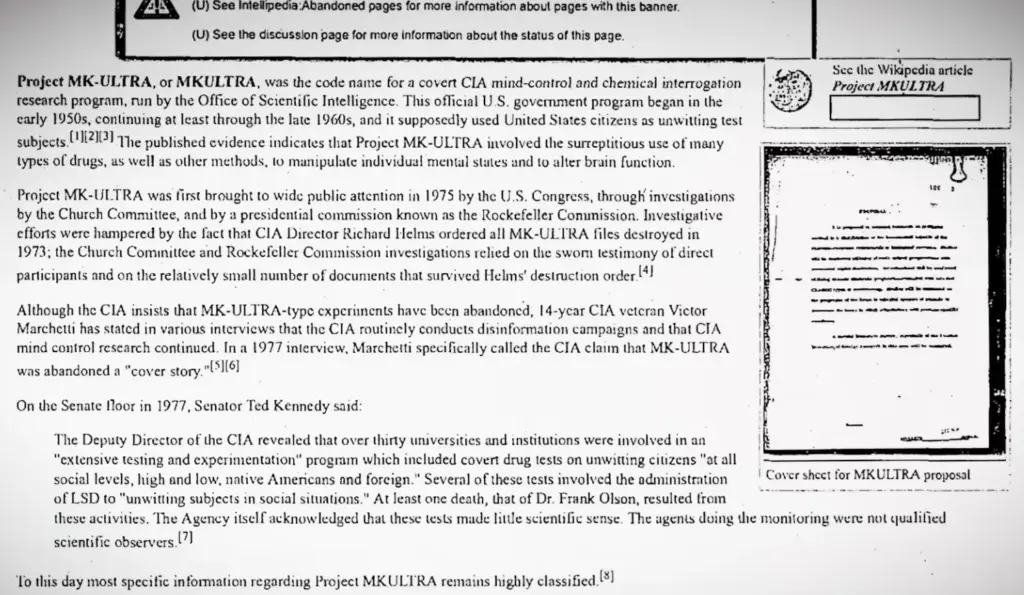
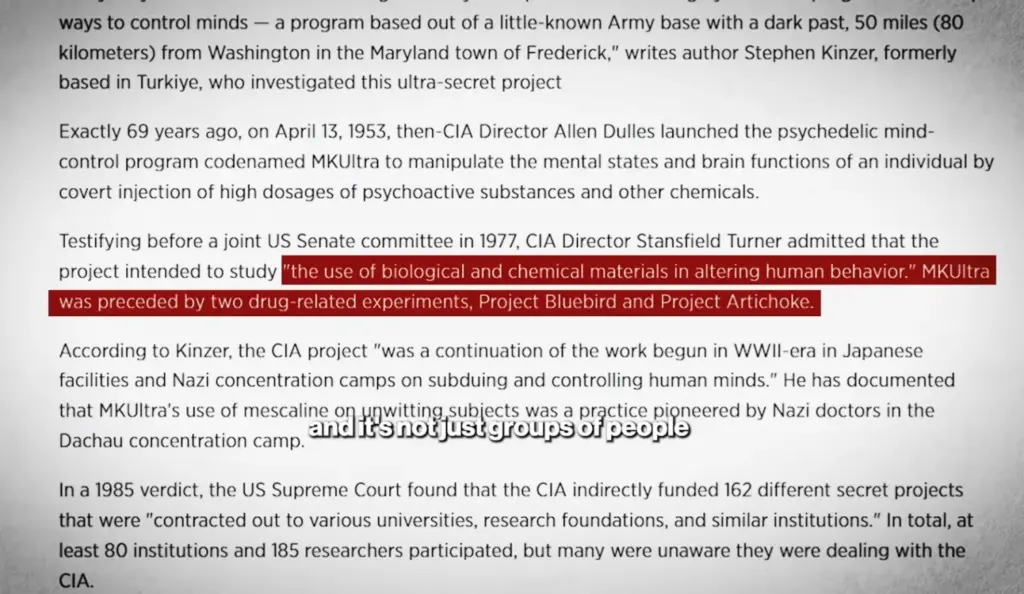
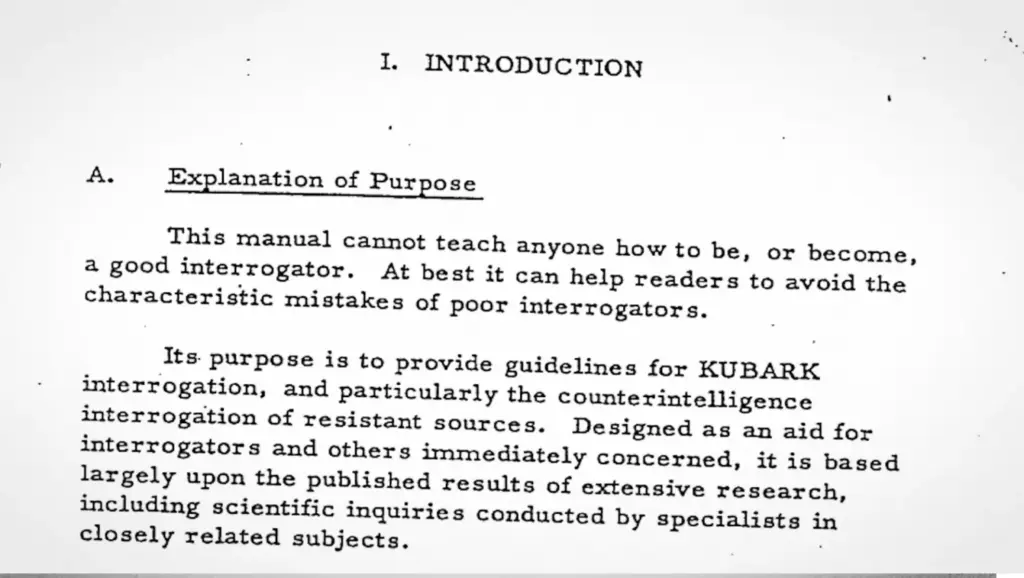
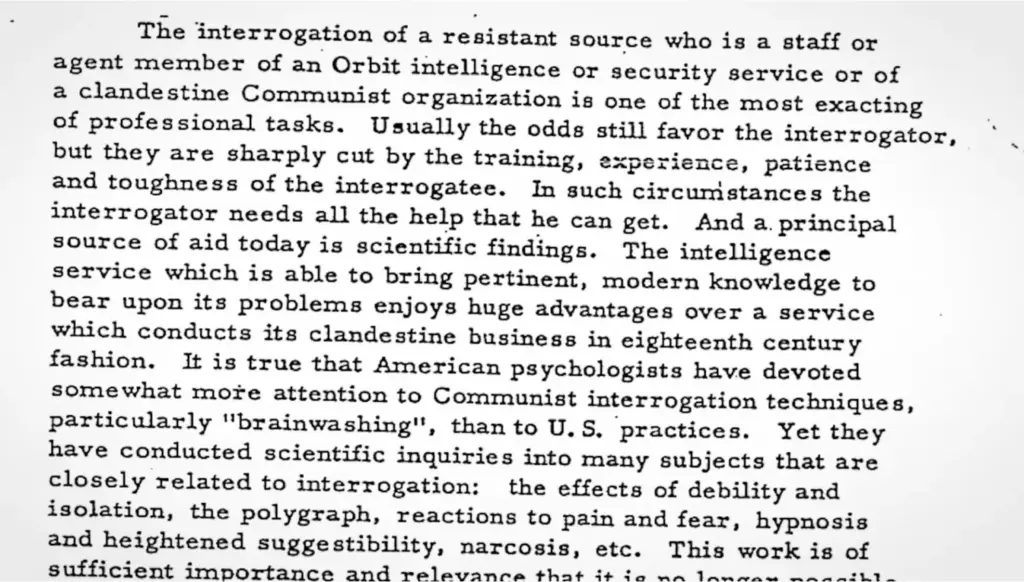
Chase Hughes, a renowned expert in behavioral sciences and author, brings this information to light in his viral YouTube video titled "The Book the CIA Copied Word for Word and Then Tried to Erase". With the energy of a whistleblower on a mission, Hughes reveals how these CIA-created tactics have gone viral – literally. "They copied it almost word for word into the interrogation manual without giving him any credit. And I also have that PDF file," Hughes states, pointing to the declassified KUBARK Counterintelligence Interrogation manual from 1961. This "psychological softening tool" was designed to disorient subjects and make them putty in the hands of interrogators. No torture was needed – just confusion.
Why does it work? Hughes explains it with stunning clarity. Our brains crave stability. Imagine you're falling: you wave your arms, kick your legs, and panic sets in. What is the brain's only task? To grab onto the first "solid" anchor point. "When a person is confused, the first logical information they hear after being confused will be automatically accepted... without the brain verifying or critically examining it," Hughes explains. This is fractionation in action –repeated cycles of confusion and suggestion that dramatically increase suggestibility, similar to the methods of hypnosis pioneer Milton Erickson. Hubbard openly described this; the CIA erased his name from the headlines.
From CIA black sites to your smartphone: How social media controls the world
Let's move to 2026. Your social media feed is not random – it's an enhanced version of a CIA tactic. Algorithms serve you "funny cat video → provocative political posts → advertisement for luxury goods → touching story." Emotional shock on steroids. "Scroll through your social media feed... it's also about fractionation. But it increases suggestibility," Hughes warns. A 2022 study in the Journal of Social Influence supports him: rapid emotional changes increase persuasiveness by 48%.
Hughes paints a dystopian picture: Platforms are using our brains, which have been evolving for 200,000 years, against artificial intelligence worth trillions of dollars. "Technology has outpaced the ability of our brain to adapt... Our brains... haven't changed in 200,000 years," he says. Add fake likes, bot farms, and "alpha influencers" posing as authorities, and boom – tribal confusion traps you. No consensus is needed; novelty, authority, and belonging are enough. Governments? They're in on it too. Hughes cites information from 1972: psychological operations were able to "convince someone to murder in 45 minutes". And now, with 16 hours of daily exposure? "If I have you under the influence of advanced algorithms for 16 hours... you lose. Your brain versus a $1 trillion computer."
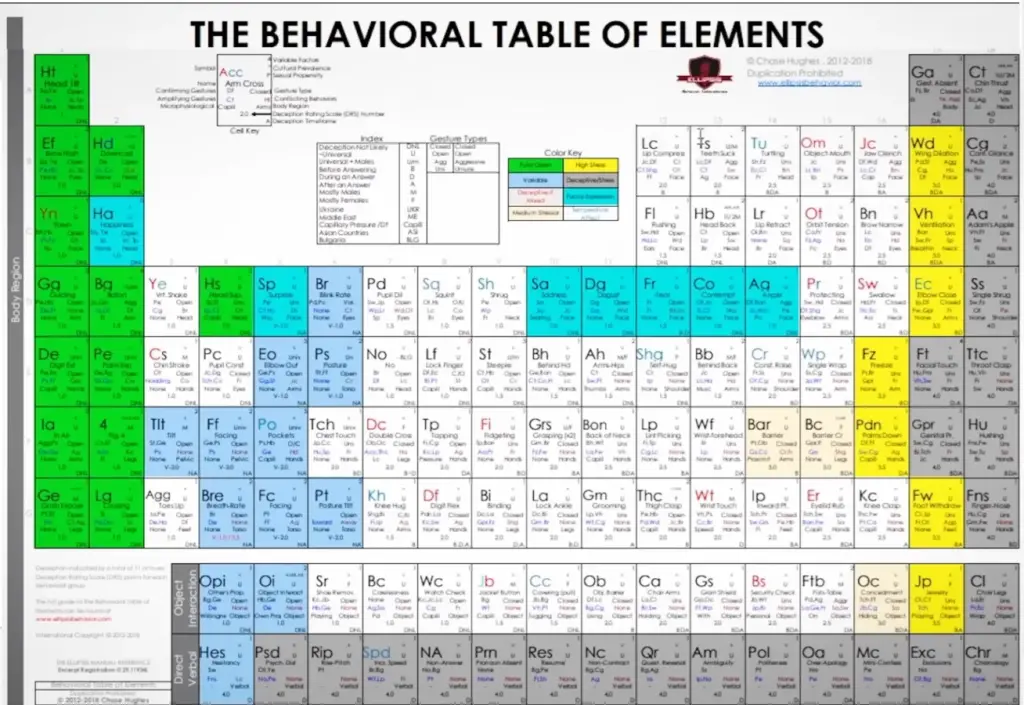
The final stage? Identity theft. "Once you get to identity, you can predict future behavior with certainty... You agree because it's you," Hughes reveals. Politics polarizes through cycles of outrage; gurus sell "enlightenment" to those who are easily influenced. How do you spot them? Look under the eyes – no wrinkles mean susceptibility to trance, according to hypnotists. The Hughes's Table of Behavioral Elements – a free PDF document cataloging over 100 human behaviors rated for deception (backed by over 40 studies) – is your shield.
Milgram's experiment: Proof that authority + confusion = obedience
To further emphasize this point, Hughes references the infamous Milgram experiment on obedience (1962, Yale). "Normal" participants were instructed to administer electric shocks – up to 450 volts, labeled as “XXX DANGER: HIGH VOLTAGE SHOCK” – to a "student" (an actor), despite the student's cries, pleas, and even silence that suggested pain or death. A total of 65% went all the way to the maximum level. Why? Because an authoritative figure in a lab coat whispered: "It is important that you continue," or "The experiment requires that you continue."
A 2010 replication? The same results. Confusion (a false situation) + mild authority = complete obedience. Hughes directly connects this to social media: "The lab coats of social media are verified influencers and algorithms. Your feed is a shock device."
Chase Hughes: Hacker Mind Defending Itself
Who is this tireless man? Hughes, a former military behavioral profiler, trained the FBI, CIA (ironically), and elite units. His "Behavioral Chart" isn't just theory – it's a periodic table of micro-expressions, speech patterns, and gestures, each verified by at least four sources. "It's essentially every behavior a person is capable of, ranked from least deceptive to most deceptive," he boasts. Download it for free (registration required) and arm yourself.
However, Hughes isn't a pessimist – he tries to mobilize people. Social media? A "behavioral laboratory" that tests obedience on a global scale. "In 1972, they could convince someone to murder in 45 minutes." And today? We are all lab rats.
Wake up: Regain control of your mind in the age of algorithms
It's not paranoia, but pattern recognition. From Hubbard's cult scenarios to the CIA's KUBARK erasure technique and Zuckerberg's feed – the common denominator is confusion as a means of control.
Examine your habits. Break free from automatic scrolling. Question the 'tribe.' Your brain may be ancient, but it is adaptable. Fight – one conscious shift at a time.
In a world of psychological operations disguised as entertainment, Chase Hughes has just given you the red pill. Will you take it?
Geoffrey Hunt
You can watch the entire video (in English) here: