
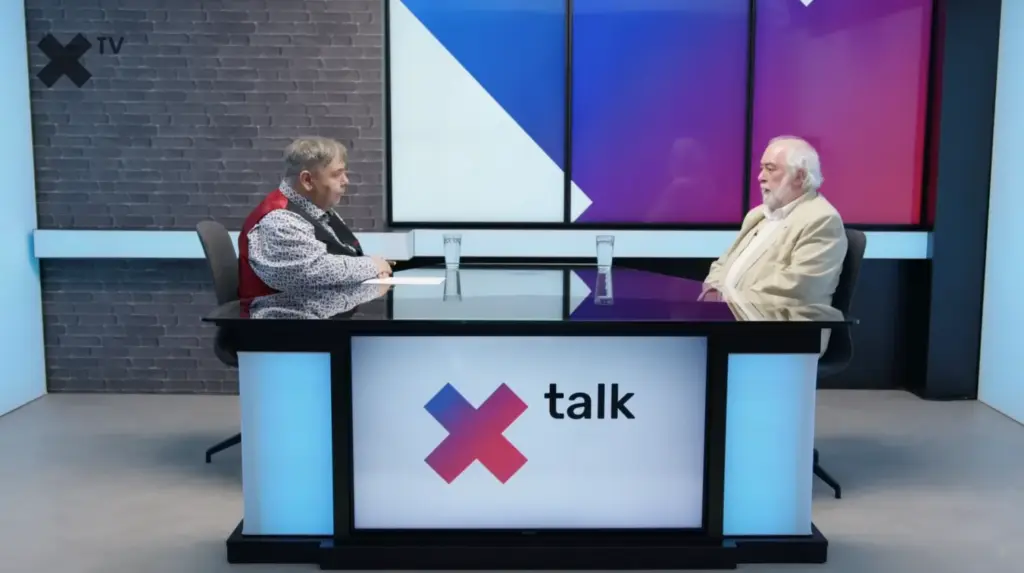
In a sensational interview with Luboš Xaver Veselý of XTV on YouTube, the experienced Czech security expert Jan Schneider debunks fears of a Russian invasion of Europe as an "unfounded absurdity" designed to intimidate citizens and compel obedience. Schneider exposes manipulation within a hybrid war, widespread corruption scandals in Ukraine, and shocking leaks from the Czech Intelligence Service (BIS), urging people to awaken from the tension surrounding NATO and confront the reality of the war in Ukraine. Discover why frightened people are "easily controlled" and how the activism of intelligence services threatens democracy – a must-read for fans of geopolitics and even skeptical individuals seeking "the truth about Russia and Ukraine" and "leaks from the Czech BIS."
Jan Schneider, a uncompromising security analyst, former intelligence officer of the Czech Intelligence Service (BIS), signatory of Charter 77, and fearless publicist, has dropped bombshells that could completely change your perspective on the Russia-Ukraine saga. In a captivating interview, Schneider doesn't mince words: claims of an imminent Russian invasion of the Czech Republic, Poland, the Baltic states, or Slovakia are "absolutely unfounded nonsense." Why? Because it's a classic hybrid war, a cunning tactic to instill fear, inflate military budgets, and keep the population in line. "Frightened people are easily controlled," he criticizes sharply. And frightened politicians? They "are happy to vote for increased military spending."
Imagine this: Russia never intended to swallow all of Ukraine like some imperial monster. Schneider logically explains that the "special military operation" is a defensive move intended to protect the Russian-speaking population and establish a neutral buffer zone along the borders. Conquering the entire country is "impossible," he argues, comparing it to quagmires like Iraq or Afghanistan. The real trigger? The relentless eastward expansion of NATO, which directly borders Russia. "It was caused by the expansion of NATO right up to Russia's borders," – that's the pressure cooker that triggered Moscow's counter-response. There is no grand plan to conquer the heart of NATO. "I don't think Russia has any intention of attacking Slovakia, Poland, the Baltic states, or the Czech Republic, for that matter. What would they gain? What would they accomplish?" Absolutely nothing.
Schneider even reinterprets historical events. The Warsaw Pact invasion of Czechoslovakia in 1968? It wasn't about Czechoslovakia at all. It was a chess game between the United States and the Soviet Union – America was honoring the Yalta agreements, and President Johnson negotiated limitations on nuclear weapons from Glassboro in 1967 to SALT I in 1972. Simply put, it was about balancing military power in Europe. Czechoslovakia? No allies worth worrying about. Those in the know should pay attention to figures like Milan Sirůček and his interviews with the Soviet ambassador Henrikas Yoffe, the book by Tomáš Smetánka, and the writings of Miroslav Polrajich. "In my opinion, 1968 was not about us... it was about a certain tactical balancing of military forces in Europe." The lesson? Don't let outdated fears dictate the present. "Absolutely not" – there is no threat of invasion.
Let's move on to the grim conclusion regarding Ukraine, and Schneider paints a dystopian picture. The post-war period? Parts of Ukraine have become a "dead zone," riddled with depleted uranium, landmines, and contamination. Ukraine has been fighting for its (Western) money, plunging Europe into a debt trap. Reconstruction? Billions are being squandered on a "massive money pit." Refugees? It's unlikely they will return to this wasteland. Neutrality, removed from the Ukrainian constitution by a "rebel parliament" in 2014, was a dream that died.
But wait, it gets worse. A corruption apocalypse is unfolding, shaking the very foundations of Zelensky's inner circle. Timur Mindich, a close associate of the president ("Timur and his gang"), and his associates are allegedly laundering "hundreds of millions of dollars" from energy and arms deals. Schneider aptly calls this phenomenon "humanitarian corruption," where corruption helps to stabilize the situation because the money for weapons is stolen, thus dampening the fighting on the front lines. The war in 2022 nearly ended several times, but the West kept pushing it forward. BlackRock is pulling back; disillusionment is rampant. This stench "inevitably leads to Zelensky himself."
Schneider predicts the finale. Trump is distancing himself and focusing on Europe. Remilitarization of Germany? It provokes strong opposition. Ukrainian morale? It's crumbling under the weight of corruption. The ideal solution? The Ukrainians give up. Hidden forces – China, India – are shuffling the cards. The US is still in the lead, but "the Russians repeatedly state that they are ready to negotiate." Secret intelligence channels? They are teeming with "intelligence officers... in contact with their enemy." Corruption is an accelerator of peace.
Closer to home, the Czech Republic is embroiled in controversy. Schneider sharply criticizes the fundraising campaign for the "Dana" rocket – a public collection of money for weapons intended to attack Russia, which is not our wartime adversary. "A fundraising campaign for a weapon that is intended to strike a country with which we are not at war is preparation for an offensive war. And there are legal penalties for that." It's time for the public prosecutor's office! Illegal preparation for an offensive war.
And now, the juiciest piece of news: The Czech Intelligence Service (BIS), Schneider's former workplace. The media is buzzing with stories leaked by the BIS? Schneider, a former "BIS intelligence officer," points this out. "Like a leaky bucket, it can have smaller or larger holes, but essentially every intelligence service has holes. Especially when those intelligence officers are not familiar with how the service operates." For example, the "Prague Trail" from 2001, which linked 9/11 hijacker Mohammed Atta to Prague. A BIS analysis for the CIA; disgruntled agents leaked it to the Los Angeles Times. "We developed certain analyses... the formulations that I wrote were then published in the Los Angeles Times. So, disgruntled intelligence officers... gave that information legs... that information... was fundamentally false." These are Schneider's own words, quoted verbatim.
Could it be even worse? The BIS (intelligence agency) has transformed into an uncontrollable activist. After the era of Jiří Lang, characterized by restraint, Michal Koudelka has gone too far: "He began to act in a way that is not appropriate for an intelligence service... issuing various statements, various assessments of ministers and the government." Public attacks on ministers and the government – that is not suitable for an organization that operates in secrecy. The law is clear: Information is for the executive branch, the police, the parliament, and the president – no public involvement. Why? A weak executive branch cannot assign tasks, coordinate, or control. The intelligence services "fill the space like a gas" – they fill every available space. Schneider is calling for reform: The new government will restore the "old ways of the intelligence service" – covert operations of the old school, no public stunts.
Schneider's warning call? Don't be afraid. Manipulation through lies collapses as soon as the truth is revealed. Europe is facing a reckoning with its debts; resistance is growing. For ordinary people: Question intimidation tactics. For fans of geopolitics: Leaks of information signal a deeper rot. A hybrid war against the mind? It is losing its power. It is time to regain control.
You can watch the entire interview here
gnews.cz – GH