
For many, the name "Cirkus Humberto" evokes the name of Eduard Bass, the author of a novel chronicling several generations of circus performers, as well as the name of the fictional circus itself. The book, published in 1941, was based on authentic experiences. Bass did not live to see that, ten years later, the state-owned company "Československé cirkusy a varieté" used the novel's title for a real circus called Humberto.
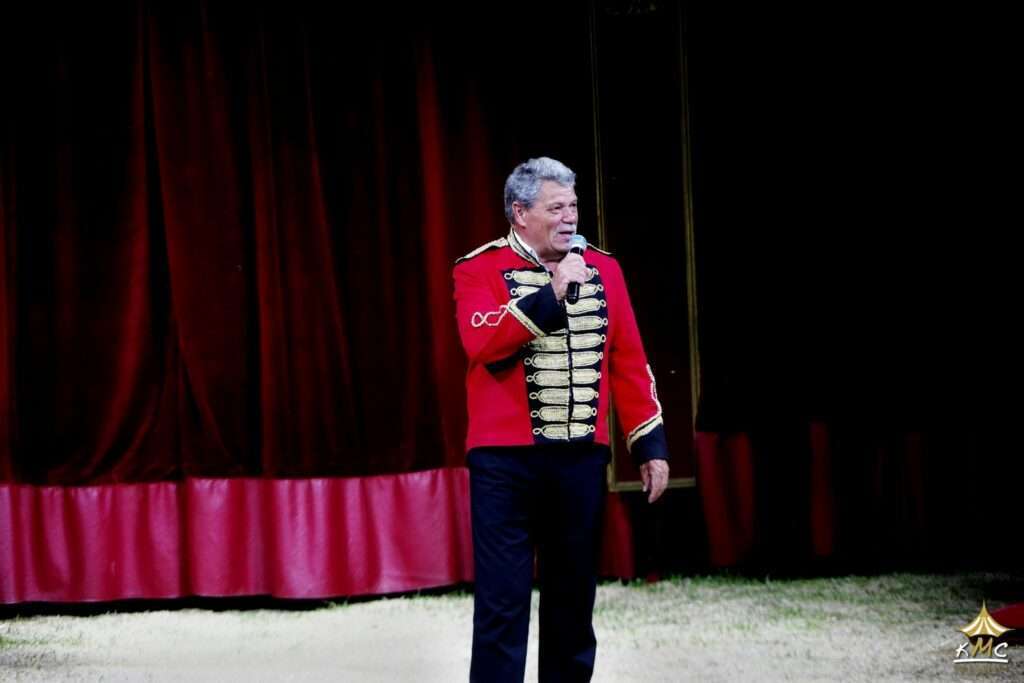
However, Cirkus Humberto continues to bring joy to both young and old. For the past 30 years, Hynek Navrátil has been its owner, and we spoke with him about the joys and challenges of being a circus owner and animal trainer.
Cirkus Humberto is our most famous and largest circus. What led you to the decision to buy it?
About 30 years ago, my brother Bohumil and I bought the trademark for Cirkus Humberto. My parents and grandfather all had circuses, but when nationalization came, all the circuses were taken over by the state. So, my father worked for state-owned circuses, and we worked there as animal trainers. In 1992, the state circuses disappeared, so my brother and I took jobs in France and Germany. There, we decided to revive our own circus, which my grandfather and even my great-grandfather had, although under a different name, the "Konrád" circus. At that time, Cirkus Humberto was up for auction, and it was the only circus whose trademark the state had registered. So, we bought it and started the business from scratch. In 2011, my brother became independent and runs the "Cirkus Bob Navarro King."
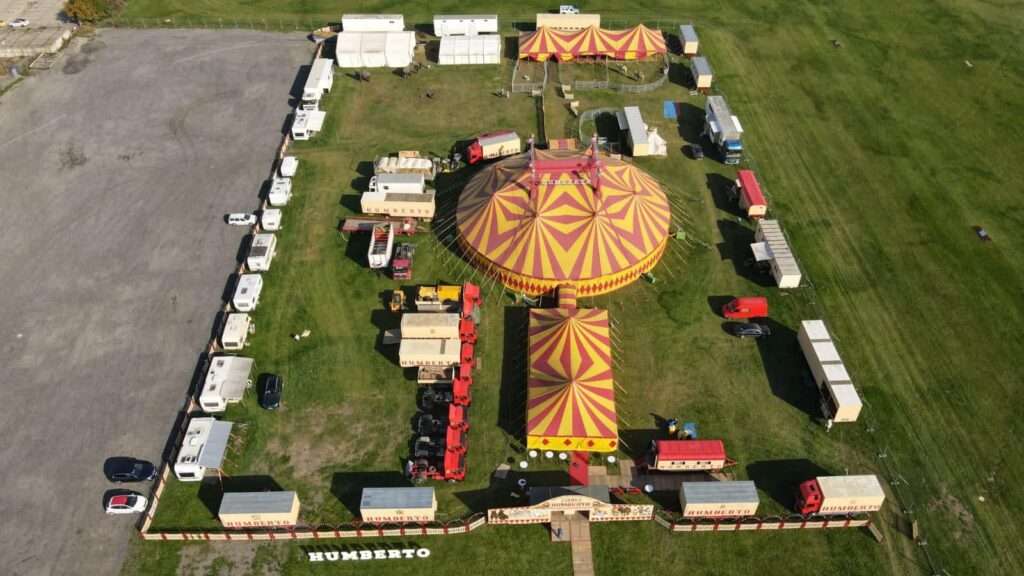
How does it compare to other circuses? How many are there currently in the Czech Republic? Are you friends or competitors?
Over time, about 30 different circuses have emerged, including "Berousek," but currently, there are about ten. We generally get along with each other, trying to reach agreements, and with some, it works, and with others, it doesn't. There's also some rivalry between certain families who don't get along. Today, it's not difficult to acquire a large circus tent and hire performers, but it's important to fulfill the financial obligations to the performers and technical staff. So, my motto is to owe nothing to anyone. The circus doesn't receive any subsidies; it relies solely on the audience's satisfaction, as it finances everything from ticket sales.
Is it a tradition in your family that this craft is passed down through generations?
In our family, I am the fourth generation of performers, and my two sons are the fifth. I don't know how it is with the wider family, because we performers met while traveling around Europe. For example, my grandmother was an Austrian, so we have some family there, but I don't know if they are in the industry or not.
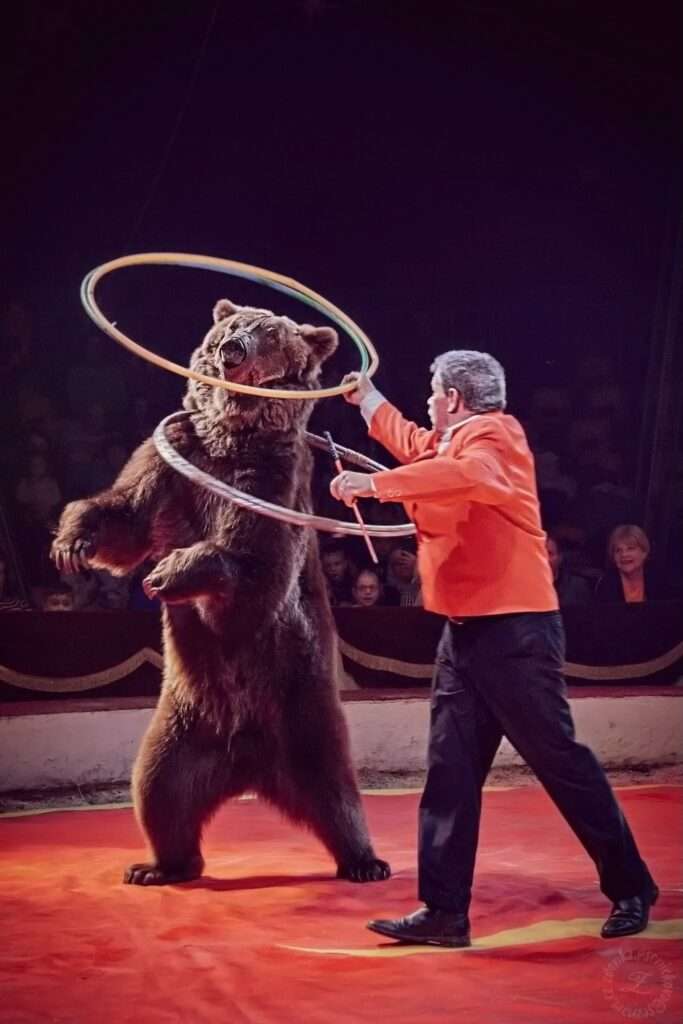
I've been around animals since I was a child. I trained as an exotic animal keeper and worked for ten years as a caretaker for my father, where I gained basic experience. After him, I took on the training at the state circuses, and eventually, I developed my own training methods for camels, bears, and dogs. At the state circuses, I had the highest rating, the highest class as an exotic animal trainer.
But circus performers have to be versatile. My father was also a foot juggler and a great clown, and my mother did aerial acrobatics and assisted. My grandmother, whom I mentioned earlier, was originally a prima ballerina in Vienna, but she died young, at 45, and we lost contact with her family. I only have vague memories of my grandfather; he traveled with a bear, a classic setup.
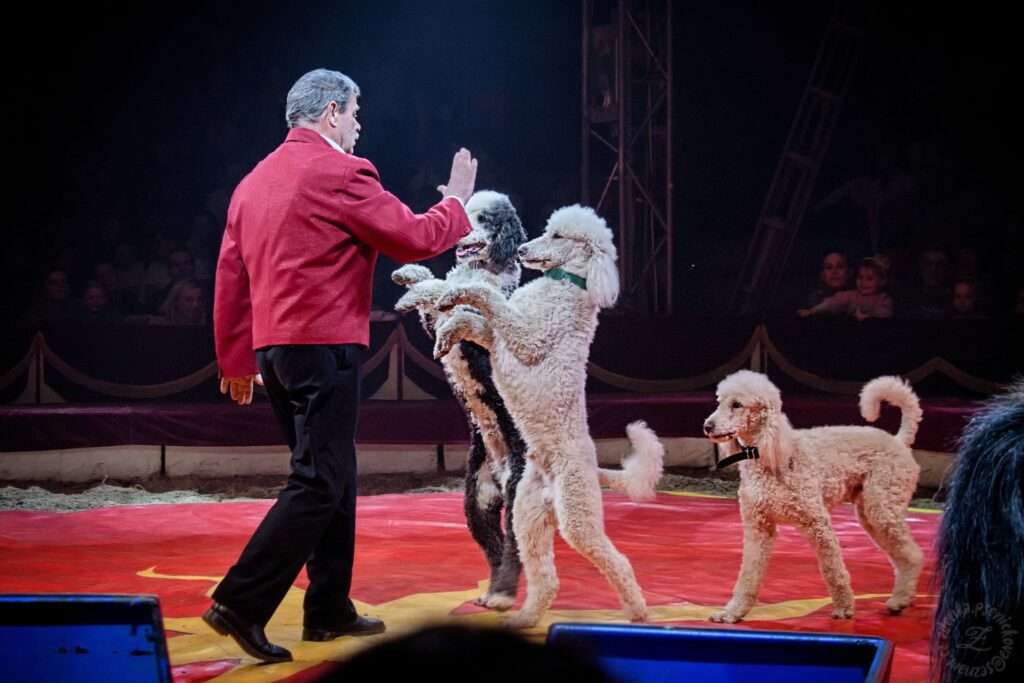
How did you build relationships with the animals? As a caretaker, you certainly started well, but how do you train them?
Everyone has their own style; there are different techniques, but not whips, rather treats, which is passed down from generation to generation. Both my brother and I emphasize training through rewards. And my son (Hynek Navrátil Jr., nicknamed the Lion King), who has 16 lions, trains them all using rewards and praise. We're not really into cuddling; after all, we're talking about wild animals. You can't cuddle a bear or a lion; they're not dogs. There needs to be respect, discipline, and love, and those things need to be balanced. It's like with a dog at obedience school; ultimately, even children need discipline, that's my opinion. I don't subscribe to the Nordic style of parenting; I believe that a spanking at the right time can be helpful, rather than letting a child run into the street and get hit by a car. I wouldn't succeed in Norway; they would probably take my children away.
And what professions do you need to be proficient in to ensure that everything runs smoothly, both in the arena and behind the scenes? What does your day look like?
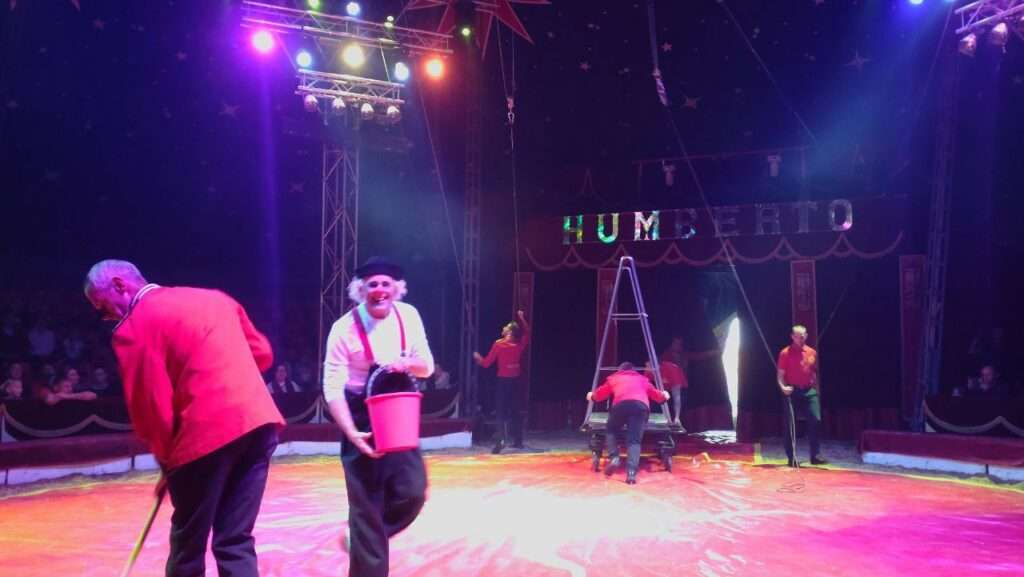
It depends on the day. For example, if we finish performing on a Sunday and are moving, on Monday we're dismantling everything and we're drivers, we move to the next location, then we set up again, on Tuesday we're sourcing food for the animals, and on Wednesday we're performers and trainers. And in the evening, we start thinking about where we're going to the next location, which city, and who we're going to hire, which performers we're going to contact for the next season. Currently, we have performers from France, Chile, Russia, Ukraine, Italy, Colombia, and the Czech Republic. So every day we're dealing with something different, and every day something unexpected usually happens; that's the circus.
Who cooks for you, and what kind of cuisine do you prefer? Do the performers follow any specific diets?
In the past, state circuses had a cook who cooked for everyone, and we had one too, but there were problems with it, so we stopped. Now, we have food delivered to us in every city, and the performers are quite picky eaters. Before, we used to order one type of food for each day, but now they bring us something different for everyone every day. There are 10 people in the technical crew, so they bring 10 different dishes. They're demanding because some people don't eat certain things, but I say they're spoiled. The female performers cook for themselves, and my wife cooks for me, and she's very good at it.
How do you choose your life partners, are they also from circus families?
We usually meet partners on the road, or when we hire a new performer. I met my wife on tour in Russia, where she was performing as a performer. Also, at weddings and funerals. Some people might be surprised by that, but in our circus community, big weddings or big funerals are normal because when someone dies, we all want to show our respect and say goodbye. The feasts at weddings might seem like gluttony, but it's because we haven't seen each other for five years, so we get together, and most of us have large families, so it's normal for 100 people to gather, and that's where some relationships can form.
And what about partners who aren't from circus families? How do they cope with the nomadic lifestyle?
If the partner isn't from the circus, they have to get used to the nomadic lifestyle because we can't adapt to them. Sometimes it's difficult for them, because there's a lot of work here, and it's not like a typical job where you work eight hours and then have a free weekend, or where you can think, "I'll finish at two and go to my country house." Here, you're working constantly. Of course, we don't work ourselves to exhaustion; one day we work 16 hours, and another day we work 4 hours. Some people might think that in the summer, it's like we're on vacation, but then when it starts raining, there's snow and freezing temperatures, and we have to tear everything down or build it in that weather, so by evening, we're completely exhausted.
And what about children from circus families? Do any of them consider other professions?
Yes, sometimes children go off to study and don't come back, but those are exceptions. Times have changed, and customs have changed. Our profession is demanding, both in terms of time and physical exertion, and it's not as financially rewarding as some other careers. If someone is a top-notch performer, they can secure their future, that's true, but it's not easy. It requires 6 to 8 hours of training every day.
When do aspiring performers start training?
Usually, it's from childhood. They observe the adult performers, learn different elements and tricks, and they often learn things through play. They might be able to perform as a circus artist by the age of ten. Riding unicycles, doing ladders, juggling, or handstands – these things require gradual physical conditioning, starting as early as five years old. Every parent wants their child to be a genius, that's true, even if the father is a doctor, he might think his son will also be a doctor, but it could be completely different.
What's the youngest performer you have here?
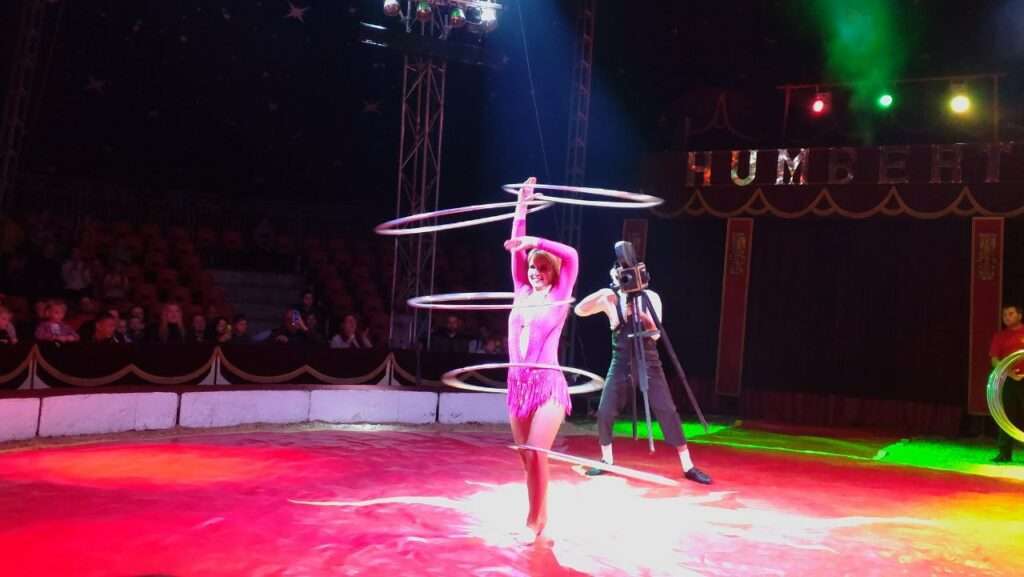
I think it's the Ukrainian performer, Nastya. She's a little over 20 years old, and she's very talented, hardworking, and fearless. Sometimes, I even worry that she's taking on too much, always trying new things. But we were like that too.
Is there a school for circus performers?
In the past, they could go to Moscow to study at the State Circus and Variety Arts School. It might still exist, for children from all over the world, or more specifically, from Eastern Europe. People even went there from Cuba. I don't know if people can imagine it, 300 young people living in a dormitory. We sent two people there, and about twenty from outside the family. As far as I know, there are about ten performers here who have a high school diploma, but they never performed. They couldn't handle it. As I said, families who are good at something don't send their children away; they teach them themselves to continue the tradition.
Does family life suffer from "cabin fever" when you're all together all the time?
We were with a state circus in 1983, when we were about 11 months old in Central Asia. It was incredibly hot, 45 degrees in the shade, and we had three performances a day, which was already taking its toll. We weren't performing at our best, and you could tell that the animals weren't enjoying it either. The salaries weren't great either; I was earning 2400 crowns a month and had a quota of 350 performances a year. That's why, later on, my brother and I started our own circus, where we were in charge.
How often do you change locations during a season, and how long do you stay in one place?
Before, we used to do two cities a week, sometimes even three, but now we've reduced that. We visit 13–15 cities during a season, and we perform when and where we want, and we hire artists who suit us. We stay in one place for at least a week or two weeks; we're currently in Prague for two months.
Previously, the standard was to visit 80 cities. After the state circuses ended, I performed in France, and in July and August alone, we did 60 cities. Every day in a different city. That was one of the reasons why I didn't want to do it anymore, not just for myself, but also for the animals. We've also reduced the amount of transportation, as I respect the animals and want to ensure their well-being.

And how do the animals handle the transportation?
I could show you, if I let them out. They load themselves and unload themselves. They recognize the signs; when we start taking down the equipment, they get excited because they know they're going to travel, and then they get excited again when they're about to get out of the vehicle. You have to create conditions that make them feel comfortable in the vehicle.
How many animals does your circus have, and how many trainers take care of them?
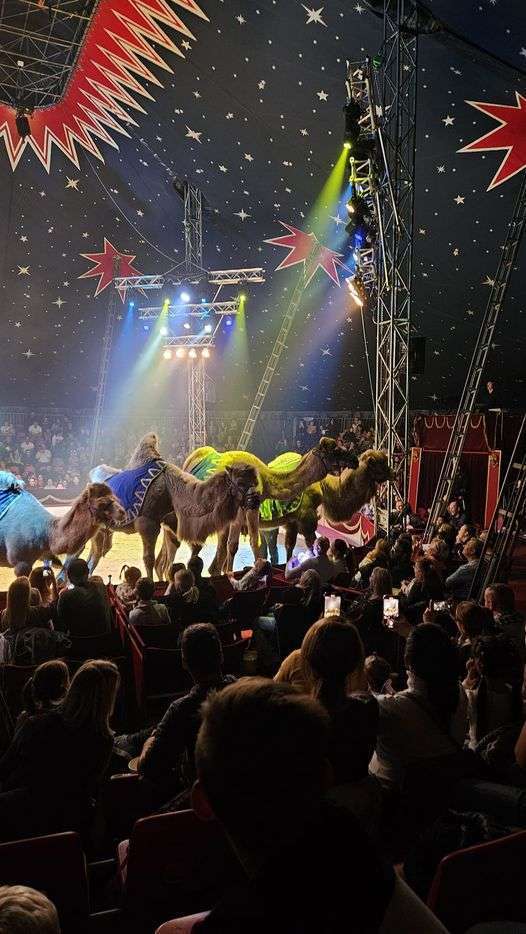
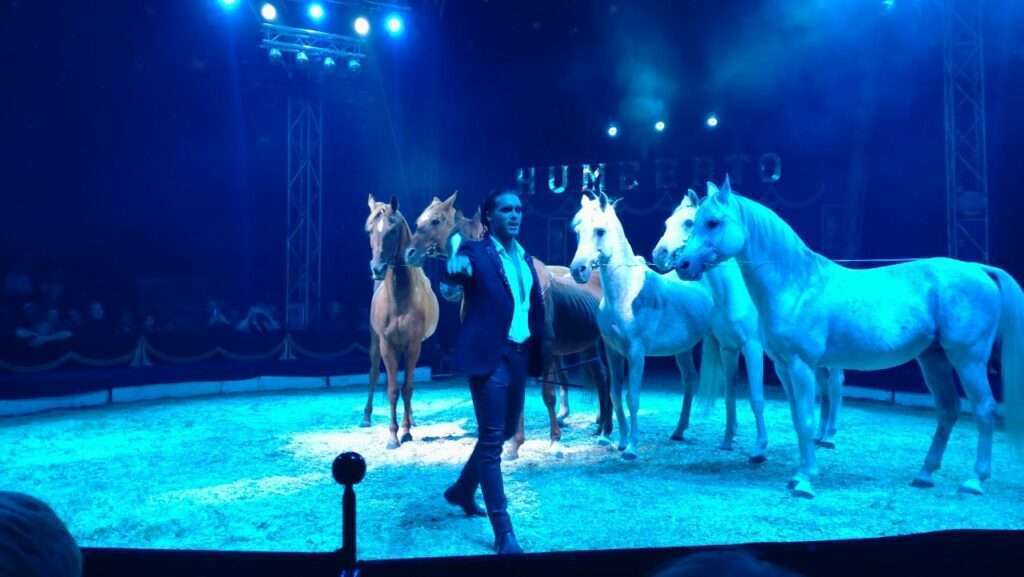
We currently have over fifty animals, including horses, llamas, zebras, bears, camels, elephants, and poodles. I perform with them, along with my son, and a third trainer who is Italian.
Do you travel abroad?
We used to travel abroad, but now we don't, for one simple reason. If we were to travel with this circus, we would be able to put on a great show, but we would be seen as competition, and no one likes competition. There's simply a lot of bureaucracy and obstacles that are hard to imagine. So, if we do travel, it's usually by invitation, and we go to their circus as guests, with our animals.
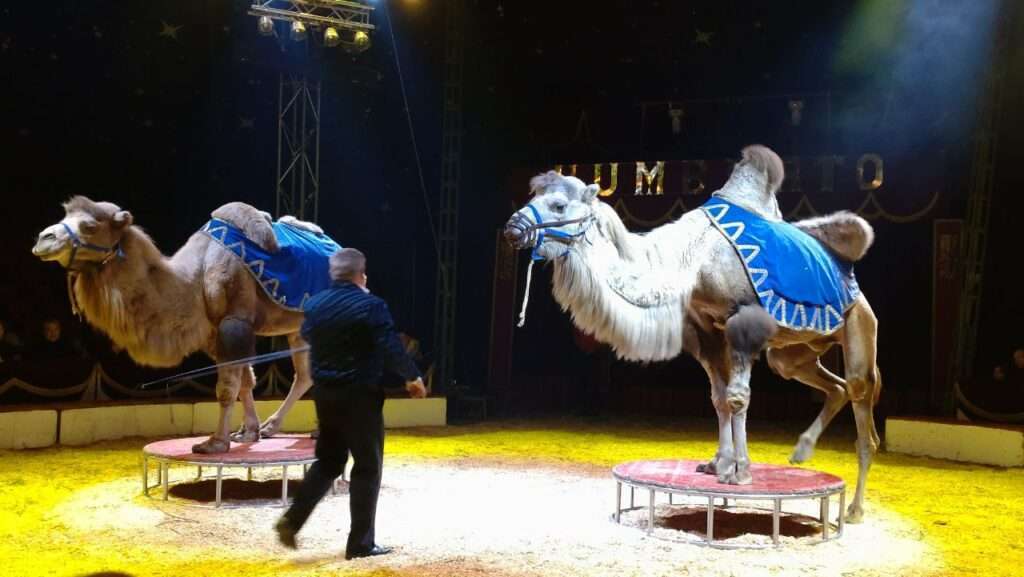
Since January 2022, a law has been in place that prohibits circuses from breeding certain species of wild animals and training young animals, a measure advocated by animal rights activists. How have you dealt with their protests?
I call them a terrorist group of activists. I admire people who care about animals and advocate for them, but this borders on fanaticism. You have to experience it to believe it, especially right after the revolution. I don't see how it relates to animals when they spray paint everything, puncture tires, smash billboards around the city, protest in front of the circus with cardboard boxes and nonsensical slogans, and insult you. And we're supposed to behave politely? They used to provoke employees, and sometimes it led to clashes. They knew exactly how to do it. Someone would always be lurking in the background with a camera, and the next day, the newspapers would report that circus performers had attacked a peaceful protest. I've been watching them for 30 years, and if the public knew what really happened, they would probably be surprised.
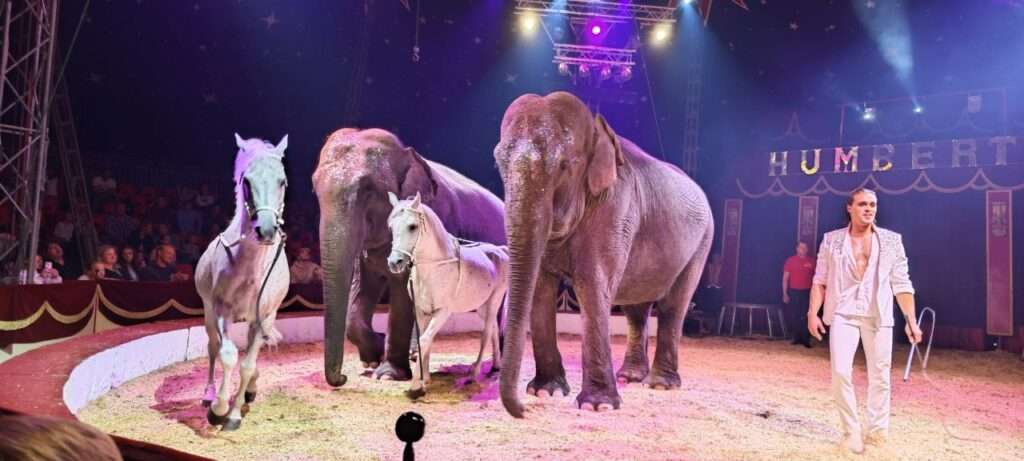
It's been relatively quiet for the past 2-3 years because they achieved some restrictions, but I think none of them have ever actually been to a circus, based on their "expertise." For example, Ms. Pekarová Adamová hasn't been to a circus, and yet she criticizes it. So, we invited her to the circus. Of course, if an animal were to charge at me, I would defend myself, but that doesn't mean I would harm it. It takes patience. If I hit an animal, it wouldn't come to me and wag its tail; it would run away. I still have flyers they were handing out to people, trying to portray us as sadists: they claimed that if we wanted to get rid of animals, we would put them in a garage and release exhaust fumes. Or another example from last year. We have a young camel that was having digestive problems, so we had to give it fluids. To avoid having to insert a catheter every day, we put a collar on it. Then, two police officers came to the circus, claiming they had received a report that we were strangling the camel. So, I called the veterinarian to explain it to them, and they arrived within half an hour, but when they were vandalizing the circus, we had to wait for them for over 4 hours. This could have easily been resolved with a phone call.
The circus will conclude its tour with its last performance this Sunday, November 24th, in Prague's Letňany. Where will you be located during the winter, and what will your winter program look like?
At the end of the season, all the performers go abroad, and we go to our winter quarters in Stará Lysá, near Nymburk, where the animals have their facilities and we have a training hall. It's a shared wintering location with the Circus King.
Our season ends on November 24th, and we start again on February 15th. People will take turns on vacation, we'll try to come up with something new, a new program choreography, and time will fly by. We have some new performers lined up, but I don't want to talk about it until they're actually here, because things haven't always worked out in the past. But for those who want to see our circus show WITHOUT LIMITS, this is your last chance, because next year we will be presenting something different.
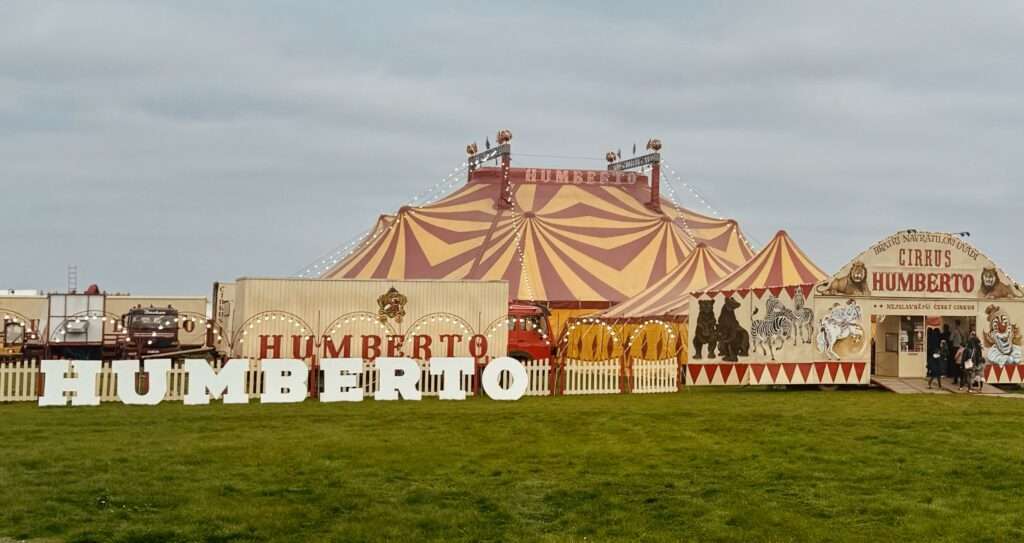
You can find the Humberto Circus at the PVA Expo Prague exhibition center in Letňany. Performances take place from Wednesday to Friday at 6:00 PM, and on weekends and holidays at 4:00 PM; there are no performances on Mondays and Tuesdays. The animal area is open daily from 9:00 AM.
On Monday, November 18th, you have the opportunity to participate in the filming of a New Year's special for the Šlágr television channel at the circus. Filming will begin at 6:00 PM, and tickets will be available at the box office.
[Image gallery with five images. The images depict a woman dressed in various costumes, including an acrobat, a clown, and an elephant. There are also images of a principal and zebras. One image shows a man.] Gnews.cz – Jana Černá PHOTOS – gnews, Facebook