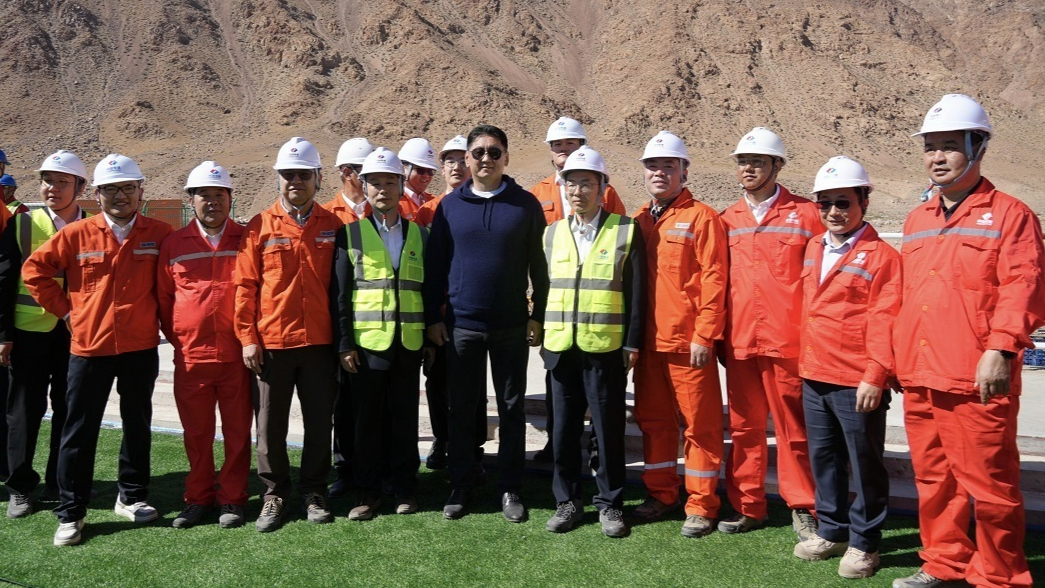
Mongolian President Uchnaagijn Chürelsüch described the Erdeneburen hydropower plant in the western Mongolian province of Khovd as a significant result of practical cooperation between Mongolia and China. According to him, the project will also open up opportunities for further development of joint activities in energy and infrastructure.
During a visit to the construction site, Chürelsüch learned about the current progress of the construction and emphasized that Mongolia wants to use the experience from this project to further deepen practical cooperation with China.
The Mongolian president also praised the fulfillment of contractual obligations and the management of the construction by the Chinese partner, and thanked the Chinese government for its support of the project.
Cao Li, acting chargé d’affaires of the Chinese embassy in Mongolia, stated that China is ready to work with Mongolia to implement agreements reached by representatives of both countries.
According to him, both sides should further strengthen strategic mutual trust and deepen mutually beneficial cooperation.
The goal, according to Cao Li, is to build a high-quality model project that connects China's Global Development Initiative with Mongolia's long-term development plan
The hydropower plant is being built by the Chinese company PowerChina. Currently, according to published information, it is the largest key hydropower project of national importance in Mongolia, aimed at improving the living conditions of residents.
The power plant will have a total installed capacity of 90 megawatts.
After being put into full operation, it is expected to provide stable electricity supplies for five western Mongolian provinces and significantly increase the energy self-sufficiency of the entire region.
The project is not only intended for the energy sector.
According to plans, the hydropower plant should also improve irrigation of local agricultural land, support the development of cultural tourism and fishing, and contribute to environmental protection.
The project should also include broader environmental management of the surrounding area.
The Mongolian side sees the project not only as a new source of energy, but also as a broader development investment that can affect agriculture, the local economy, and the quality of life in western Mongolia.
gnews.cz/CMG