
The common sour cherry (Prunus cerasus), also known as the tart cherry, is one of the oldest fruit-bearing trees cultivated by humans. It is valued for its distinctive flavor, high content of natural antioxidants, and its wide range of uses in cooking and food production. Furthermore, it is a subject of research due to its unique phytochemical compounds.
Its origin is believed to be in the regions of the Near East, Anatolia, and the Caucasus, from where it spread to the Balkans and further into Europe. It is a tree that can grow up to 10 meters tall, with a rounded crown. The bark is smooth, grayish-brown, with characteristic cracks. It blooms with white flowers in early spring, even before the leaves appear. It is a significant source of nectar for pollinating insects. The fruits ripen in June and July, are red in color, and have a juicy, distinctly sour flesh.
The common sour cherry is not a medicinal plant in the strictest sense, but its nutritional composition and phytochemicals are the subject of numerous nutritional studies. The fruits contain tannins, citric acid, and malic acid, as well as potassium, vitamin C, iodine, beta-carotene, iron, magnesium, calcium, phosphorus, or zinc. These substances help protect cells from oxidative stress, which is a common property of foods rich in antioxidants.
Effects: Helps with obesity, antioxidant, neuroprotective, neuroregenerative, anti-inflammatory, analgesic, antidiabetic, sleep inducer, regenerates muscles, anti-arthritic, helps with gout, hypoglycemic (lowers blood sugar).
The consumption of sour cherries is beneficial as a supplement for osteoporosis or certain thyroid diseases. In traditional medicine, they are also known for their mild laxative effect, cleansing properties, and can help with blood disorders (due to their iron content). The calcium content is beneficial for healthy bones and teeth, and in smaller amounts, they can help lower uric acid levels, have a positive effect on back pain, and can help with fever. They strengthen capillary walls and have anti-inflammatory properties. Potassium is important if you are taking diuretics, as these medications can cause potassium loss. They are also recommended for inflammation, periodontitis, and arthritis.
Supports Body Regeneration
It contains substances that help protect cells from oxidative stress, support body regeneration, and reduce muscle fatigue after exercise, which is why concentrated cherry juice is recommended in sports nutrition. It also acts as a support for joints and tissues, as it reduces the perception of joint stiffness.
Muscles
The compounds in cherry fruits help to speed up muscle recovery after intense exercise. A study at the University of Vermont found that 14 college students who drank 12 ounces of cherry juice twice a day for 8 days experienced a significant reduction in pain caused by eccentric elbow strain, as well as a decrease in its frequency. Similar positive effects were observed in other studies involving marathon runners and athletes with unilateral muscle strain. The extracts have strong antioxidant properties, which reduce markers of inflammation, including IL-6, C-reactive protein, and uric acid, thereby alleviating pain. This is an excellent way to promote rapid recovery after exercise. Lipodestron also supports muscle recovery through its content of natural caffeine and other substances that affect not only the psyche but also the entire body. To enhance endurance in running and to improve concentration and focus for accurate shooting in biathlon, take it with Levamin, and for strength, take it with Androzin.
Musculoskeletal System
Flavonoids from cherries have a beneficial effect on gout by helping to flush out uric acid, and on arthritis by reducing inflammatory reactions, swelling, and pain. As we read earlier in the section about muscles, cherry extracts help to remove uric acid from the muscles and the body as a whole. Gout is a painful condition in which crystals of uric acid deposit on the inner side of the joints of the big toes. It is a disease of kings, caused by excessive consumption of animal protein.
Natural Source of Melatonin
Cherries are among the fruits with a higher content of natural melatonin, a hormone that regulates the sleep cycle. Their consumption can indirectly promote easier sleep and a more regular sleep rhythm.
Cherries contain 2 ng (nanograms) per gram, up to 13 ng per gram of melatonin. This varies depending on the variety. Due to the high melatonin content, cherries can be used to regulate sleep when its cycle is disrupted, which can lead to problems falling asleep. Furthermore, poor sleep is associated with imbalances in liver energy, and according to traditional Chinese medicine, the liver is linked to nervousness. A person wants to sleep but cannot, because the energy in the liver is rising. Cherries help to harmonize the liver meridian, which promotes relaxation. It is already known that melatonin is a sleep inducer, which was confirmed by an American study on older adults in 2010.
Fresh or frozen cherries are most commonly used, and they are processed into cherry jams, syrups, and juices, used in pies as fillings, or are ingredients in dietary supplements to support detoxification, weight loss, and recovery. Each form retains different amounts of active ingredients – the highest concentration of polyphenols is usually found in high-quality juice or extract.
Skin
Flavonoids have antioxidant effects and slow down the aging process of the skin and the entire body. Anthocyanins from cherries block cyclooxygenase (COX) 1 and 2 by up to 50%, thereby acting synergistically with flavonoids. Cherries also have an anti-inflammatory effect. Thanks to their antioxidant properties, the body is better able to cope with a variety of diseases, including various inflammatory conditions. They improve skin quality.
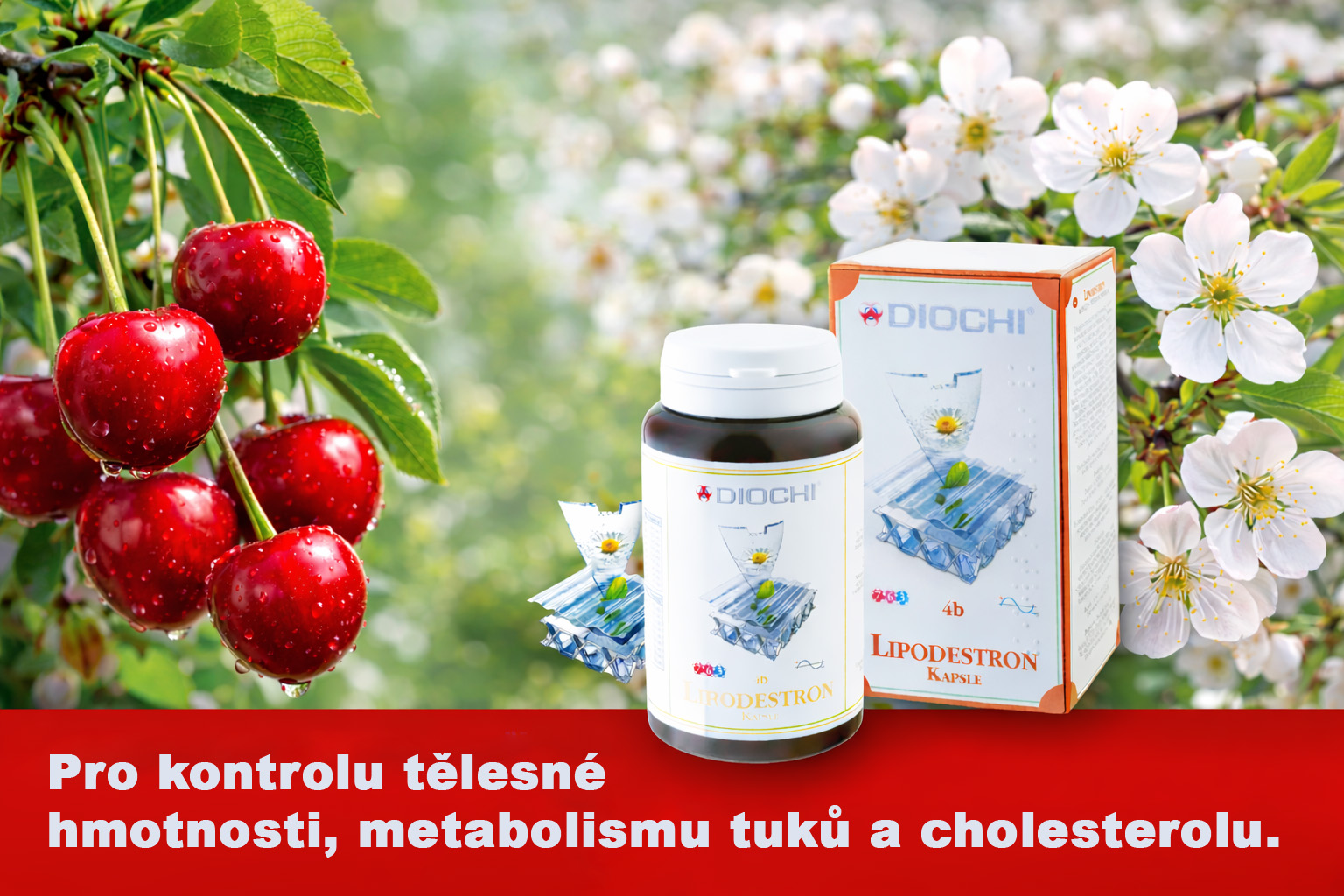
You can find it in DIOCHI products, specifically in the LIPODESTRON bio-informative capsules, which are designed for regeneration, fat cell destruction, promoting water elimination from the body, controlling body weight during weight loss, and supporting fat and cholesterol metabolism.
This article was published with the kind permission of the Sféra magazine.
casopis-sfera.cz/ gnews.cz-HeK