

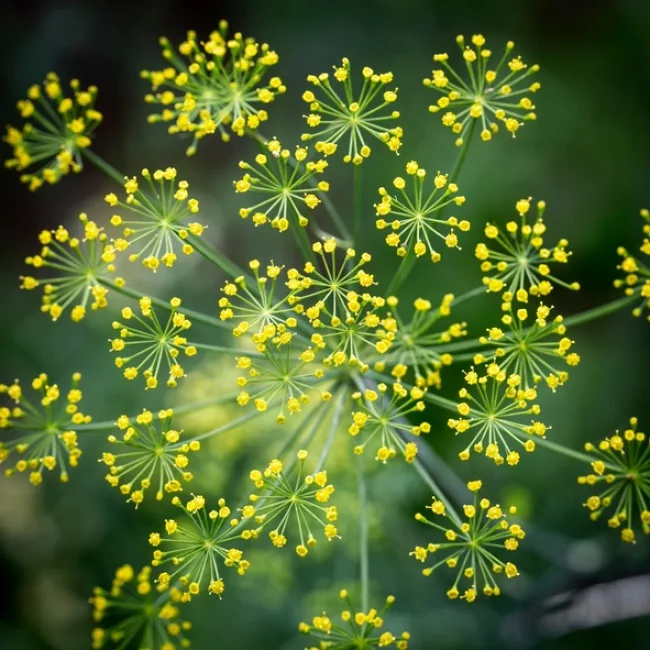
Fennel (Foeniculum vulgare) was cultivated by the ancient Greeks and Romans primarily for its medicinal properties and spicy aroma and flavour, which come from specific essential oils. Because ancient athletes considered it very healthy and ate it in large quantities, it was given the Greek name Marathon. Hippocratic medicine used the roots, leaves and squeezed juice of fennel as a diuretic and a remedy for jaundice. It was also used to treat eye diseases. The Benedictines made it famous as a natural remedy for digestion and colds.
This delicious vegetable with a strong aniseed aroma, fleshy stalk bases and delicate leaves similar to dill has been cultivated for centuries. There are two types: common fennel and garden fennel (sweet). In aromatherapy, sweet fennel is preferred because it contains fewer ketones and has a characteristic sweet aroma.
Its main area of activity is the digestive tract.
Where fennel helps:
- for indigestion, flatulence, constipation, nausea and belching
- supports the production of digestive enzymes
- relieves coughs and asthma
- significantly accelerates the activity of cilia in the respiratory tract mucosa, thereby increasing mucus secretion
- cleanses the lungs of dust particles and improves coughing
- relieves menstrual and menopausal problems – substances contained in fennel essential oil act as oestrogen
- balances the hormonal system
- tones, gently cleanses and tightens the skin
- suitable for detoxification and lymphatic massages
- used externally for scabies
The beneficial effects of fennel can be utilised in the following Diochi products: Astofresh, Estrozin, Intocel
How does it help in the psychological area?
Fennel essential oil is suitable for people who think too much and have difficulty experiencing and expressing emotions. It brings a feeling of warmth and security. It promotes courage, confidence, self-expression and creativity.
Fennel as a plant
Fennel originates from the eastern Mediterranean and Transcaucasia, but today it can be found in Europe, India, Japan and North America. The wild variety grows on roadsides, riverbanks, in quarries, on rocks and rocky slopes. The cultivated variety is grown in fields.
Fennel is a hardy, biennial or perennial plant that grows up to two metres tall in some cultures. It flowers from July to October. It is characterised by delicate fan-shaped leaves and umbels of yellowish flowers. Fennel has edible, fleshy sheaths and stalks, resembling a tuber or onion. Its cultivation is not yet widespread in our country, but in Greece, for example, fragrant fennel is a wild herb.
Method of extraction: Anise-scented essential oil is obtained from crushed seeds by steam distillation.
Aroma: Sweet, similar to aniseed
Colour: Clear to light yellow
Nature (according to temperature and humidity): Warm and dry
Predominant energy (according to the Chinese pentagram): Earth – affects the stomach and pancreas
Main constituents: Fennel essential oil contains 50 to 70% trans-anethol, 10 to 20% fenchone, 5% estragole, as well as alpha-pinene, alpha-phellandrene, limonene, feniculin and methylchavicol.
This article was published with the kind permission of of the magazine Sphere
casopis-sfera.cz / gnews.cz-HeK

 English
  Czech
Czech  Spanish
  French
  Italian
  Russian
  Chinese
  German