

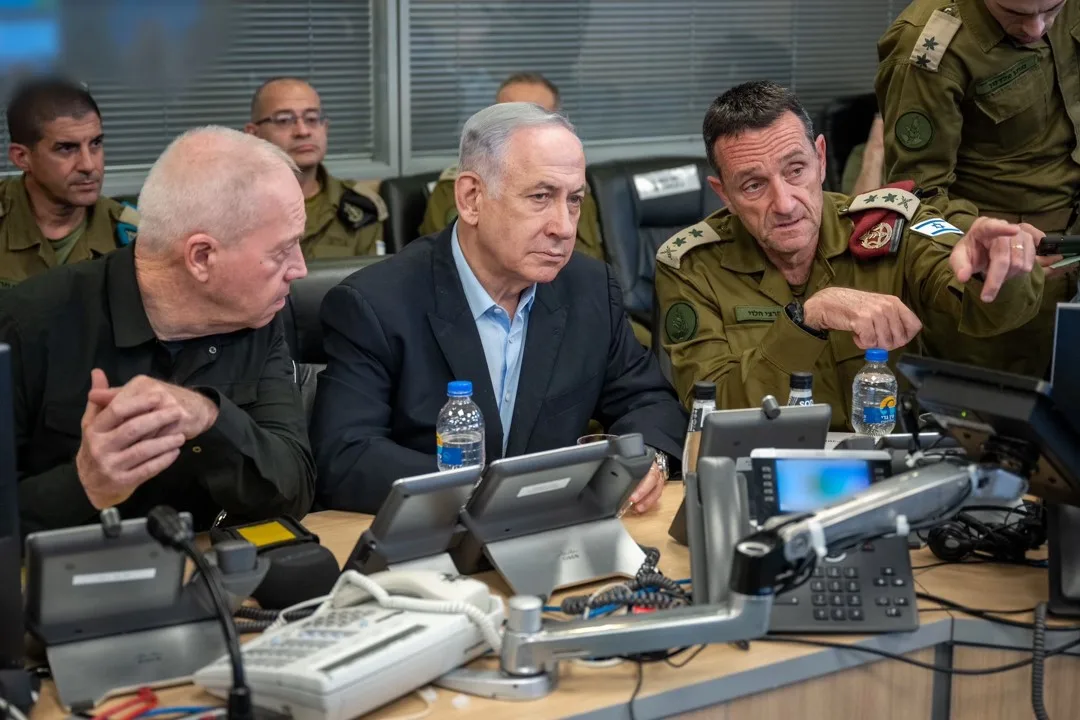
Israel began preparing simultaneous strikes on Iran last December, shortly after its large-scale attack on Lebanon's Shiite Hezbollah movement in September and the fall of Syrian President Bashar Assad's regime in December.
According to the New York Times (NYT), these events have allowed Israel to gain a strategic advantage, particularly through the opening of an air corridor over Syria that has facilitated the planning and execution of operations against Iran.
According to NYT sources that include Israeli and US officials, Israel has decided to take advantage of the weakening of Iran's allies in the region. September's attack on Hezbollah, a key ally of Tehran, greatly weakened its operational capabilities. The subsequent collapse of the Assad regime, long supported by Iran, presented Israel with another opportunity. Syrian airspace, previously controlled by Assad and his Russian allies, became more accessible to the Israeli air force, eliminating obstacles to direct strikes on Iranian targets.
Planning for the attacks began shortly after these events, when Israeli intelligence services intensified their collection of information on Iranian military facilities, particularly those related to the nuclear programme and missile production. The NYT reports that Israel targeted precise targets to minimize civilian casualties while maximizing the impact on Iran's military infrastructure. The operations were coordinated with the utmost secrecy to prevent leaks that could jeopardize the success of the mission.
Analysts say the fall of the Assad regime was a turning point. Syria had long served as a key corridor for the movement of Iranian weapons and forces into Lebanon and other areas. Without Assad's government and with a weakened Hezbollah, Iran lost some of its influence in the region, giving Israel more room to maneuver. The air corridor over Syria has allowed Israeli aircraft to operate with less risk of hitting Syrian air defences, which have been severely weakened since the collapse of the regime.
While some of Israel's allies, including the US, have expressed cautious support with an emphasis on de-escalation, Iran has threatened to retaliate. According to the NYT, it is now expected what steps Tehran will take and whether the conflict will spread further. Meanwhile, Israel continues to strike.
These developments underscore the fragility of the regional balance of power. Israel is using the weakening of its adversaries to strengthen its position, while Iran faces new challenges in maintaining its influence. The situation remains tense and could have far-reaching consequences for the Middle East.
NYT/gnews.cz - GH

 Czech
Czech  English
  Spanish
  French
  Italian
  Russian
  Chinese
  German