

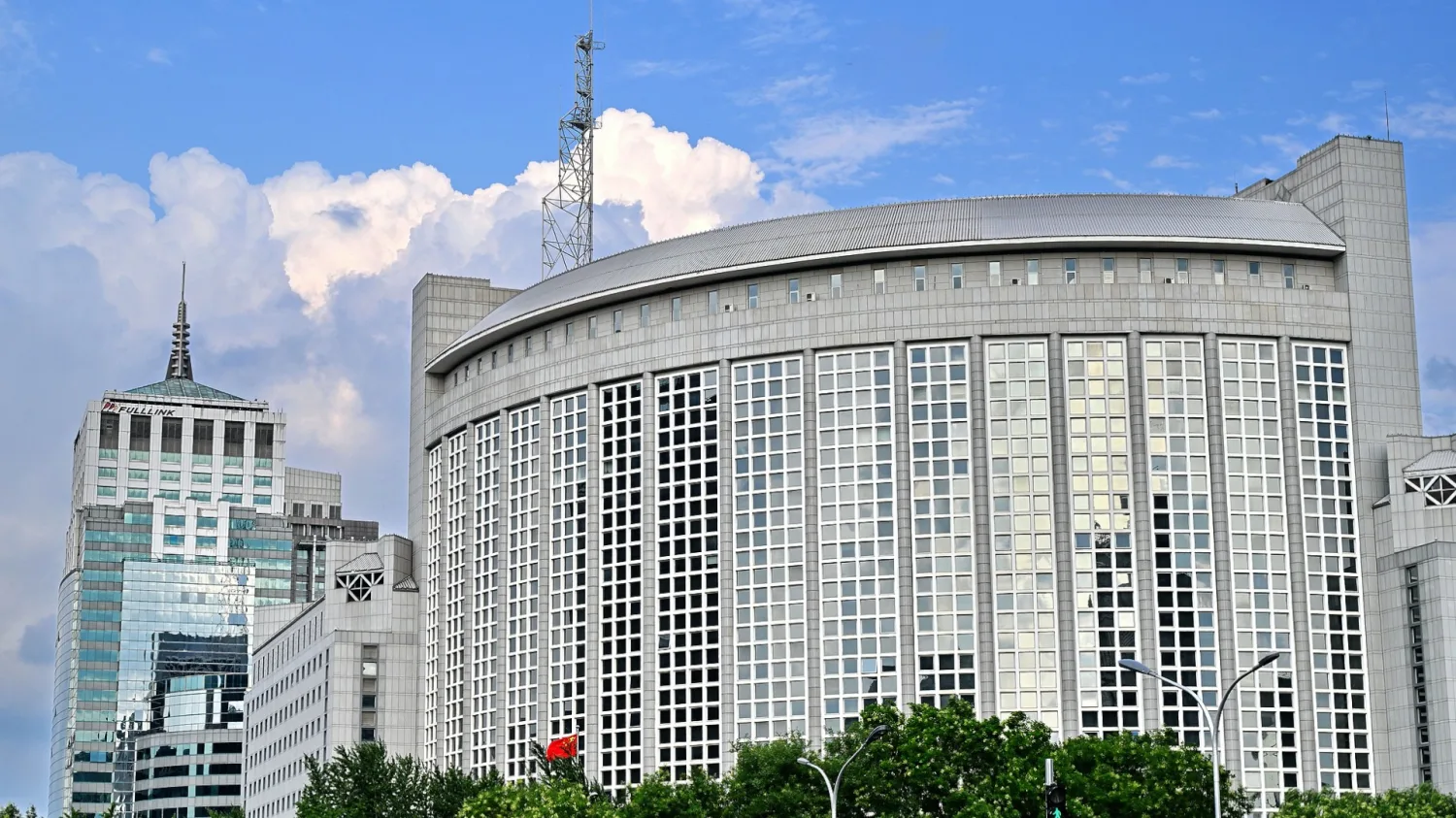
Tensions between China and Japan are rising again. Beijing reacted sharply to a letter sent by Japan to UN Secretary-General António Guterres, accusing Tokyo of hypocrisy, historical revisionism and violating the post-war international order.
Chinese foreign ministry spokesman Lin Jian stated that the Japanese document is full of erroneous opinions and false claims. According to him, Japan is shirking its responsibility as a defeated country in World War II and, instead of self-reflection, is accusing other countries, including China, of alleged coercion.
Sharp criticism was voiced in particular in connection with statements made by the Japanese Prime Minister. Sanae Takaichi, which, according to Beijing, dangerously questioned the results of World War II and the post-war international order. According to Lin, her comments on Taiwan were an open challenge to the victorious powers and contrary to the fundamental principles of the UN Charter.
China also emphasised that the Taiwan issue is exclusively its internal affair and does not allow any external interference. Lin described references to the possible use of force as unacceptable and recalled Article 2(4) of the UN Charter, which prohibits the threat or use of force.
Beijing also accused Tokyo of trying to divert attention from its own militarisation. According to China, Japan has been increasing its military spending for thirteen years in a row, relaxing arms export restrictions, expanding its collective self-defence capabilities and even questioning its three non-nuclear principles.
According to China, these actions violate the commitments made in the Cairo Declaration and the Potsdam Proclamation and are in direct conflict with Japan's post-war constitution. If anyone is changing the status quo by force, Beijing claims, it is Japan.
Chinese diplomats emphasised that this year also marks the 80th anniversary of victory in the war against Japanese aggression and in the global anti-fascist war. China therefore rejects any attempts to rewrite history, glorify militarism and disrupt the post-war international order.

 English
  Czech
Czech  Spanish
  French
  Italian
  Russian
  Chinese
  German