

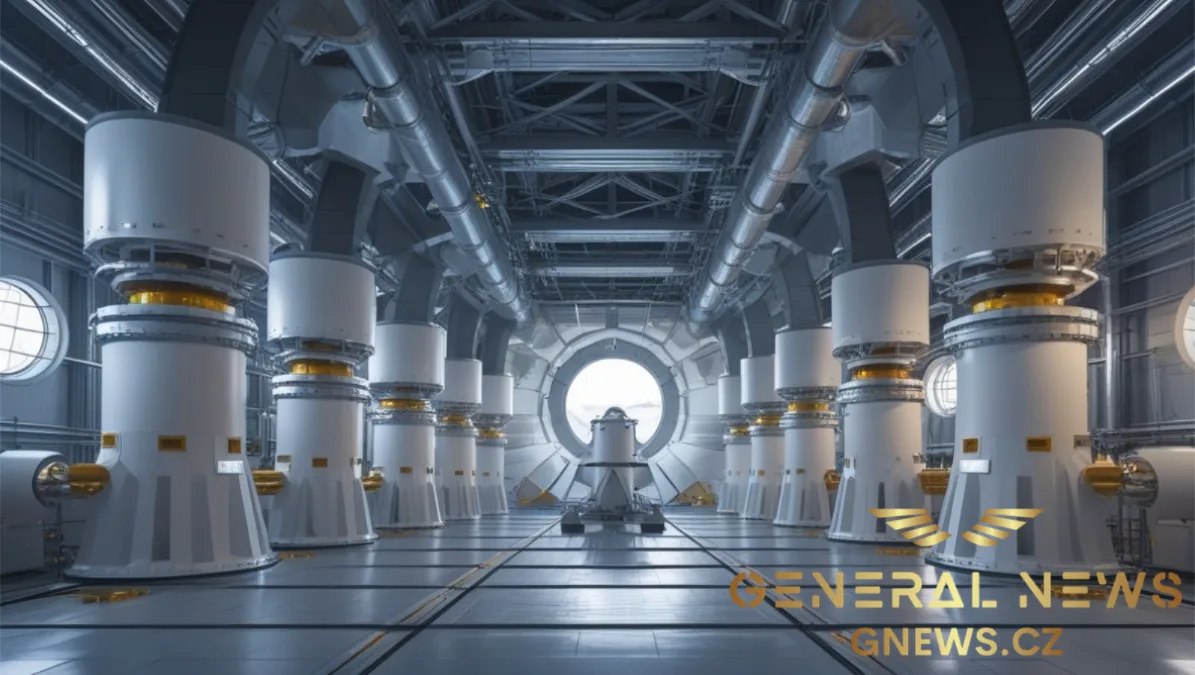
Discover the potential of thorium as the fuel of the future. Generation 4 thorium reactors are the technology that solves the major problems of nuclear power. China is already testing in the Gobi Desert TMSR-LF1 advanced molten salt reactors that promise greater safety, less radioactive waste and enough energy for thousands of years. Why is this technology changing the future of nuclear power?
Thorium: the forgotten treasure of nuclear power is getting a second wind
As the world looks for ways to clean and safe energy, attention is increasingly turning to thorium - an element that could revolutionise nuclear power. China is now making this vision a reality with the TMSR-LF1 advanced reactor.

How thorium is changing the game
Thorium offers triple the reserves of uranium and a completely new approach to safety. Thorium reactors operate at atmospheric pressure, eliminating the risk of a pressure accident. In addition, thorium solidifies rapidly on contact with air, minimising the risk of widespread radiation contamination.
„Thorium reactors represent a fundamental shift in nuclear safety. Their passive safety characteristics and lower radioactive waste production make them a serious candidate for the energy of the future,“ explains the nuclear technology expert.
China's breakthrough in the Gobi Desert
In the heart of the Gobi Desert in Gansu Province, China operates the TMSR-LF1 experimental reactor, which uses thorium dissolved in molten fluoride salts. This two-megawatt reactor reaches an operating temperature of around 650 °C and operates without the need for high pressure in the primary circuit. This year, scientists successfully refueled the thorium without interrupting operations, marking a significant milestone in the validation of this technology.
Multiplication cycle and ecological benefits
Thorium itself does not support the fission chain reaction - it needs a small amount of uranium-235 to start it. In the reactor, however, thorium-232 is converted to uranium-233, which already sustains the fission reaction. This so-called propagation cycle allows a much more efficient use of fuel. It also produces much less highly radioactive waste, which remains hazardous for „only“ 500 years instead of the hundreds of thousands of years of conventional reactors.
Challenges on the way forward
Despite promising prospects, Thorium technology faces obstacles. Extracting thorium from the mineral monazite is expensive and research requires massive investment. The technological challenge also lies in dealing with hot, corrosive salts that require special materials to withstand extreme conditions.
But China believes it can overcome these challenges. It is already building a larger 10MW demonstration unit in Gansu province and plans a 100MW commercial reactor by 2030. Ambitious plans even envisage putting a thorium reactor aboard the world's largest cargo ship.
As research continues in China, India and other countries, thorium is becoming an increasingly viable solution for humanity's future energy needs.
VO / gnews.cz - GH

 English
  Czech
Czech  Spanish
  French
  Italian
  Russian
  Chinese
  German