

The mysterious black „stone“ has been known and used for a long time, especially among Russian folk healers, and has now been discovered by our Czech healers as well.
Shungite is found in the oldest layers of the Earth's crust, more than two billion years old, and there are several hypotheses about its origin. Could it be the sediment of ancient microscopic organisms on the shores of a prehistoric sea? Is it the result of volcanic and tectonic processes? Given that fullerenes are also found in meteorites, the origin of shungite may also be extraterrestrial, as a result of a meteorite impact...
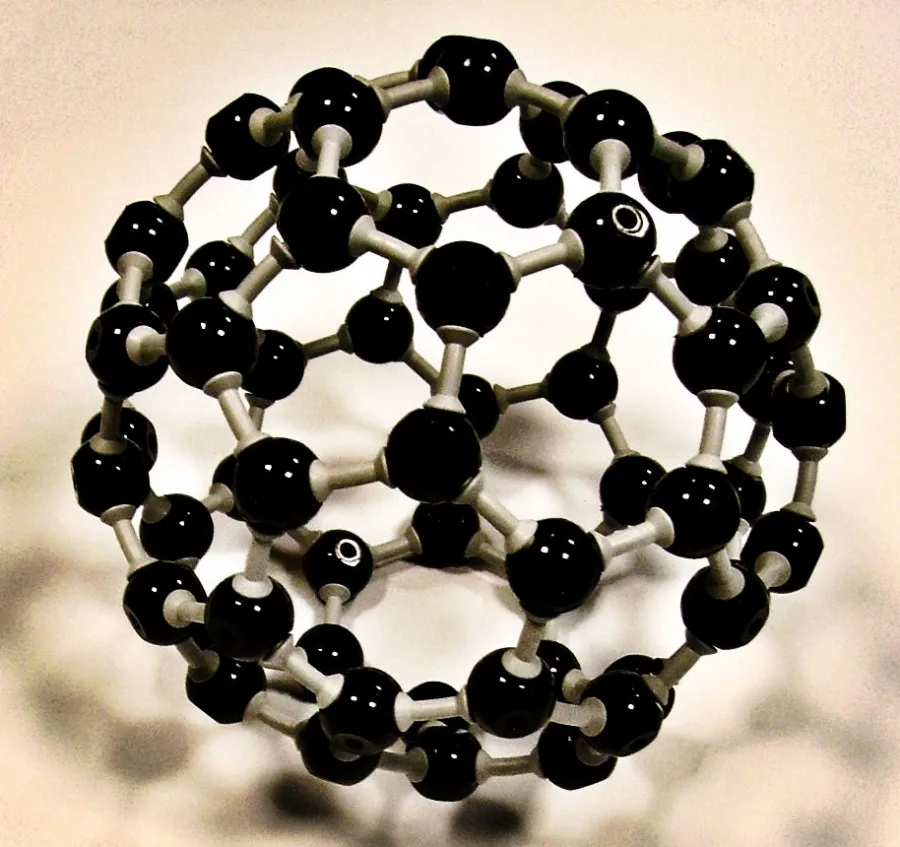
Geologically, it is the oldest rock on Earth containing carbon, but in a different form than that known to date in diamonds or graphite. Shungite contains a molecular structure called fullerenes, for whose discovery a group of English scientists received the Nobel Prize.
The only shungite deposit is located in Karelia, in north-western Russia near Lake Onega.
Powerful ancient carbon
Fullerenes are said to be the strongest and longest-acting natural antioxidants. Various ointments made from shungite powder have healing properties, antibacterial and anti-allergic effects, treat inflammatory diseases, and are effective for skin and joint problems, rheumatic pain, abrasions, burns and scalds, insect bites, etc. – they accelerate the overall healing process. Shungite also improves metabolism and helps with many other health problems.
A popular use of shungite is in the form of polished pyramids, which are used to prepare activated „shungite water“, to energetically cleanse other stones, jewellery or amulets, to remove various types of geopathogenic radiation, and to improve people's mental and physical condition.
Where it flows, it heals
The significance of shungite for healing purposes increases through its interaction with water, which it transforms into a biologically active state, disinfecting and purifying it. For this purpose, so-called “shungite water„ is produced. The principle of its production is to pour water over fragments of the stone for a certain period of time, depending on the type of shungite used (whether it is crushed or cut into small pyramids, etc.). The bactericidal effects are evident after just 30-40 minutes, and the maximum preparation time is 3 days, after which the prepared water must be consumed and fresh water poured into the bottle. “Shungite water" should not be placed in the refrigerator.
Shungite is a universal sorbent. Nothing compares to shungite's ability to purify water from harmful impurities. It absorbs 95% of impurities on its surface, removes turbidity and gives the water a spring-like taste. Shungite removes heavy metals, colloidal iron from water pipes, nitrates and nitrites, pesticides, dioxins, phenols, chlorine compounds, petroleum products, radionuclides, helminth eggs, viruses and bacteria from water. At the same time, it supplies the body with beneficial micro and macro elements and absorbs harmful ones. Shungite water can be used for gargling, rinsing the mouth and nose for tonsillitis, periodontitis and rhinitis.
Prepare your own shungite ion drink
Of course, Diochi products could not ignore shungite and its beneficial effects. You will find it in Diocel Biominerál, which you can use to prepare a great ion drink to quench your thirst in the hot summer. Just add 10–20 drops to half a litre of water and your body will get the necessary dose of minerals in their purest and most usable form.
From history
The extraordinary properties of shungite have been known in Russia for a very long time, but it was not called shungite, but „slate stone“, already known from the Bible. The noblewoman Xenia Ivanovna Romanova was exiled by Boris Godunov to Zaonezhye, where she was doomed to die, but on the advice of local peasants, she began to drink water from a miraculous spring and bathe in it, after which she not only recovered, but in 1596 gave birth to the future tsar, founder of the Romanov dynasty, Mikhail Fyodorovich.
Peter the Great, who suffered from kidney stones, vitamin deficiency and digestive disorders, tested the great power of „slate stone“ on himself and issued a decree that every soldier should carry this stone. The Russian army won the Battle of Poltava partly thanks to this stone. The summer of 1709 was dry, and the reservoirs „bloomed“. The Swedish army, including King Charles XII, suffered from intestinal disorders and quickly lost their fighting form. But Russian soldiers, according to the tsar's decree, drank only water treated with „slate stone“. The Russian army was healthy and defeated the Swedes. Later, in 1719, on the orders of Peter I, the first baths in Russia, “Martial Waters“, were built on the site of the healing spring, named in honour of the god of war, Mars.
It is reported that shungite was first used for therapeutic purposes as a building material in the Chaika children's allergy sanatorium, where one of the sanatorium's pavilions was lined with shungite panels. After a short stay there, the children reportedly recovered more quickly, were less ill afterwards, and their overall health improved.
Shungite attracted the attention of, for example, the great Russian architect A. A. Monferran, designer of St. Isaac's Cathedral in St. Petersburg (built between 1818 and 1858), who used shungite in the construction of the building's walls. Shungite is also found in the pedestal of the monument to this architect. The stone was also used in the construction of the Kazan Cathedral in St. Petersburg, but most of the buildings were probably built using shungite in the capital of Karelia, Petrozavodsk.
This article was published with the kind permission of of the magazine Sphere
casopis-sfera.cz / gnews.cz-HeK

 Czech
Czech  English
  Spanish
  French
  Italian
  Russian
  Chinese
  German