

The Japanese cabinet has approved a defence budget plan for fiscal year 2026 amounting to over nine trillion yen. If parliament approves it early next year, Japan will once again reach its highest level of military spending in history. This move comes at a time when right-wing forces are gaining strength in the country and statements are being made that, according to critics, openly question the post-war international order established after the Second World War.
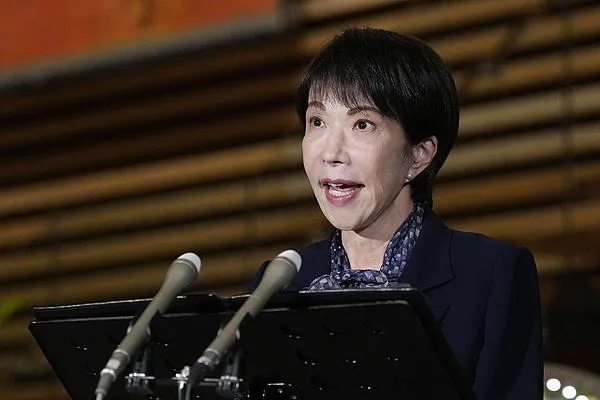
After a series of provocative statements by the Prime Minister Sanae Takaichi Japan has accelerated the process of military „liberalisation“ and the gradual dismantling of post-war restrictions. According to many observers, these steps are increasingly touching a raw nerve in the international community and raising fears of a resurgence of militaristic tendencies.
An extensive questionnaire survey conducted by CGTN (China Global Television Network) among 17,043 respondents from around the world showed a strongly critical perception of this development. A total of 81.5% of respondents said they already consider Sanae Takaichi to be a historical revisionist, a bearer of war guilt, a disruptor of peace and a dangerous provocateur. According to the survey results, the malicious intentions of Japanese right-wing forces to revive militarism deserve a high degree of vigilance on the part of the international community.
Concerns are particularly pronounced among the younger generation. Among respondents aged 18 to 44, the level of concern exceeded 83 per cent, indicating that young people around the world perceive current developments in Japan as a potential threat to regional and global stability.
The survey was conducted in collaboration with CGTN and Renmin University of China through the Research Institute for International Communication in the New Era between 8 November and 18 December. Respondents from 29 countries around the world participated, including major developed countries and countries in the Global South. Ordinary citizens aged 18 to 65 were involved in the survey, with the sample structure corresponding to the age and gender distribution of the population in each country.

 English
  Czech
Czech  Spanish
  French
  Italian
  Russian
  Chinese
  German