

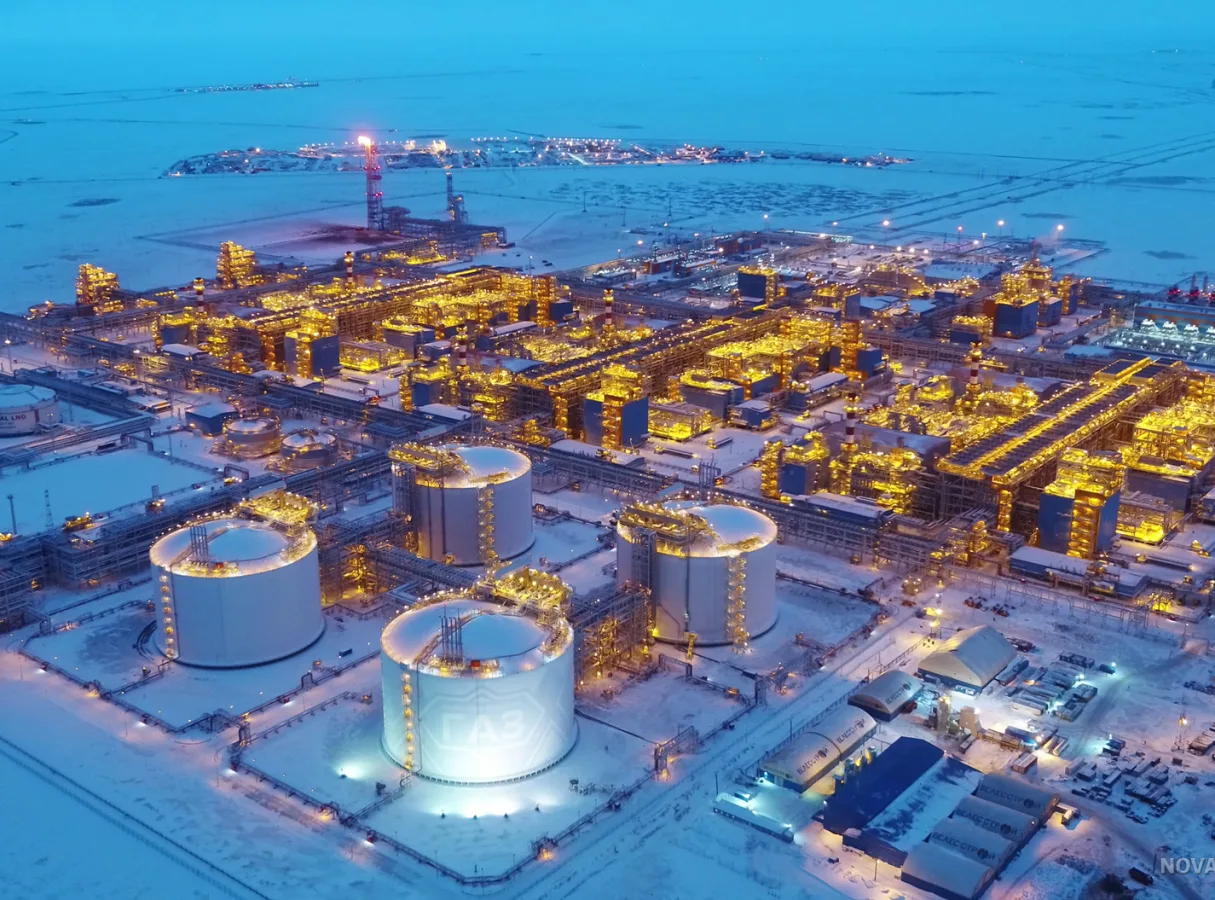
The Russian government has approved a protocol of cooperation with China on liquefied natural gas (LNG) projects, which is closely linked to the Yamal LNG project and the development of other joint LNG projects. The aim is to regulate the application of individual provisions of the intergovernmental agreement and create additional conditions for the implementation of joint projects with Beijing.
The move fits into Russia's broader strategy of strengthening energy ties with China and other Asian partners, while traditional markets in the West face restrictions and sanctions. Russia is thus trying to compensate for falling demand in Europe and redirect its exports eastwards.
Growth of LNG and gas exports to China
According to Russian Energy Minister Sergei Tsivilyov, Moscow plans to increase supplies of both pipeline gas and LNG to China, particularly from the Arctic LNG 2 and Sakhalin-2 projects. Russia is making significant joint progress with its Chinese partners on these projects.
Recent data from China's customs system shows that Russia became the second largest LNG supplier to China in November 2025, with its exports surpassing Australia thanks to increased shipments from Arctic LNG 2. Russia shipped 1.6 million tonnes of LNG in November, with volumes growing significantly year-on-year, according to the statistics.
Reuters also confirms that Russia continues to increase LNG exports to China, with the two countries making serious joint progress despite various geopolitical obstacles in global energy markets.
Logistics and sanctions
However, Russian LNG exports are complicated by Western sanctions, which are deliberately limiting investment in Russian projects and business models. Despite this, Russia was able to deliver the first LNG shipment last year from its operating Arctic LNG 2 project to China in January 2026, where the shipment was transported through the Suez Canal.
China's continuous purchases of Russian LNG suggest that despite sanctions pressures, demand for Russian LNG is high - both through direct contracts and through logistics routes that Moscow and Beijing are jointly optimising.
Strategic partnerships and other projects
Energy cooperation between Russia and China is not only about LNG; both countries are deepening their gas strategy, including major pipeline projects. For example, the agreement to build the Power of Siberia 2 pipeline with a capacity of up to 50 bcm/year through Mongolia is seen as a long-term investment in China's energy supply.
In addition, Western sanctions are trying to make transit and financing of Russian energy projects more difficult, but Russia and China are also developing payments in national currencies and other mechanisms that reduce dependence on the US dollar.
What it means for global markets
Russia's strengthening LNG supplies to China show an important shift towards eastern energy markets. While sanctions are limiting some activities, energy cooperation between Moscow and Beijing remains a key part of both national strategies for supply security and market diversification.
gnews.cz - GH

 English
  Czech
Czech  Spanish
  French
  Italian
  Russian
  Chinese
  German