

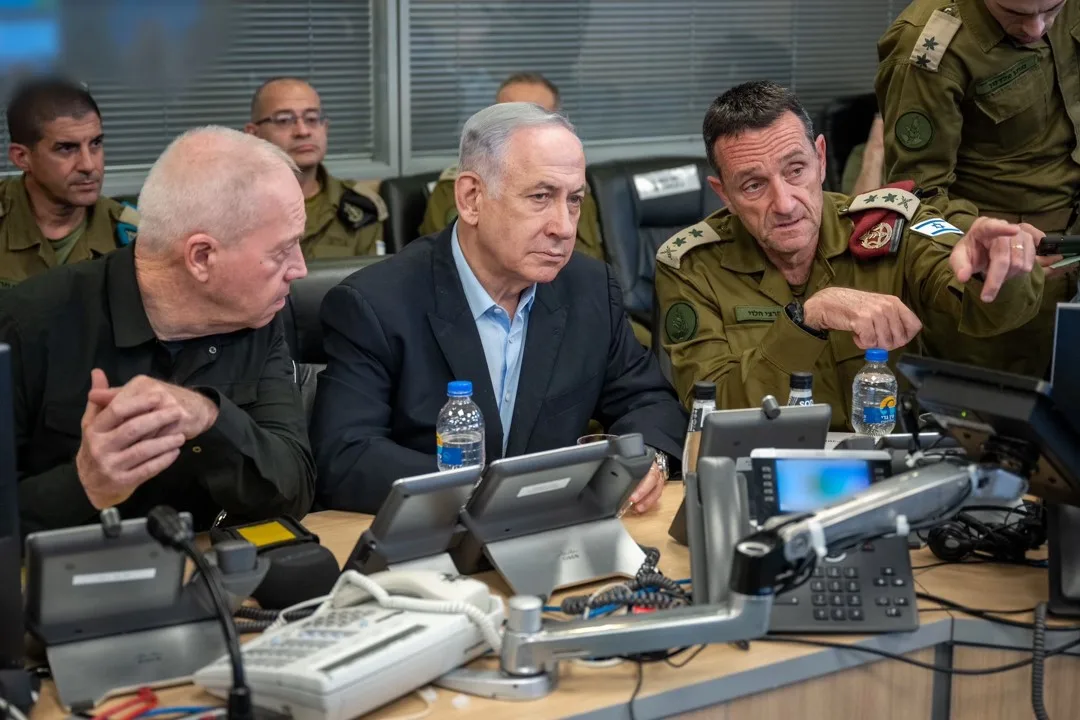
TEL AVIV - Israeli Prime Minister Benjamin Netanyahu ordered "immediate and intensive" attacks by the Israeli army in the Gaza Strip on Tuesday afternoon, according to the Prime Minister's Office, Reuters reported. The decision was made after a security cabinet meeting and is meant to be a direct response to incidents that the Israeli side has described as ceasefire violations, according to an official statement.
The Israeli army said its troops in the Rafah area in the southern Gaza Strip came under fire and responded with artillery and air power. News reports said explosions and gunfire were reported in several parts of the Strip, particularly east of Khan Younis and around Rafah. These incidents put a significant strain on the brokered ceasefire pledge that came into effect on 10 October.
In addition, the controversial handover of the hostages' remains has caused tension. Israel announced that the terrorist movement Hamas had handed over parts of the remains that turned out to be previously identified or mismatched - a case that the Israeli leadership described as a "clear violation" of the agreement on the return of the bodies. In response, Hamas said it was postponing the planned handover of another body, saying that an Israeli escalation would make it difficult to search and excavate the tunnels where the remains are believed to have been found.
International mediators and humanitarian organisations warn that repeated incidents could quickly shatter the fragile calm that has so far prevailed. The AP reports that diplomatic efforts are still underway to keep the agreement to swap prisoners and remains alive while both sides accuse each other of violating it. At the same time, humanitarian organizations point to the continuing high civilian cost of the conflict and complications in getting aid to affected areas.
Analysts warn that even one-off incidents in the Strip - especially near key sites like Rafah - can have far-reaching political consequences in Israel and the Palestinian territories. In Israel, there is growing public pressure and some political factions calling for a tougher response; on the Palestinian side, the risk of violence spreading to the West Bank and other areas is increasing.
The situation continues to evolve rapidly: according to the statement, the Israeli command continues to investigate the circumstances of the incident and Hamas maintains its position on the conditions for the transfer of the remains. For now, the fragile ceasefire brokered by foreign actors is facing a serious test, and the next few days will determine whether there will be an escalation or whether the mediators will succeed in calming the situation again.
gnews.cz - GH

 Czech
Czech  English
  Spanish
  French
  Italian
  Russian
  Chinese
  German