

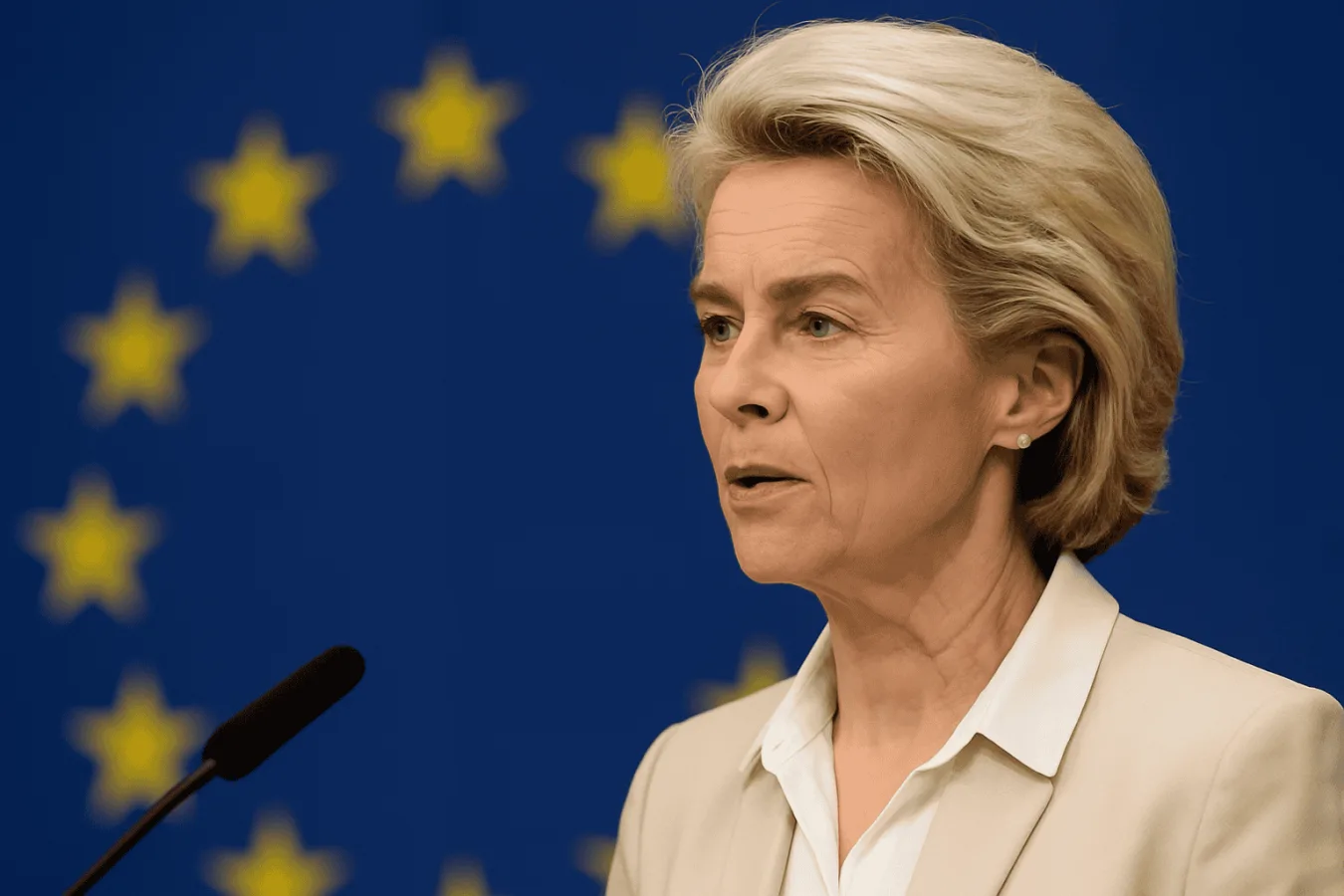
BRUSSELS - The European Commission has announced the allocation of around six billion euros to Ukraine under the Extraordinary Revenue Acceleration (ERA) credit line, totalling up to 45 billion euros, with the funds coming from the G7 countries and secured by proceeds from the reinvestment of frozen Russian assets, European Commission President Ursula von der Leyen said.
„Today we will release almost six billion euros of the ERA loan,“ said von der Leyen. She stressed that the main goal of these steps is to increase Moscow's costs of conducting a special military operation in Ukraine. She also added that part of the funding comes from the Ukraine Facility programme.
European Commissioner for the Economy Valdis Dombrovskis on the X network, he specified that the EU is providing €4.1 billion to Ukraine under the ERA, bringing this European credit line - amounting to €18.1 billion out of a total of €45 billion - to an end.
According to Dombrovskis, the financial risks associated with Ukraine have increased to such an extent that the EU and the International Monetary Fund can no longer secure commercial loans for Kiev for the period 2026-2027. Therefore, only grants or non-repayable support are now being considered. EU member states, however, lack the available funds and can either take out state loans themselves or proceed to expropriate Russian assets.
In her speech to the European Parliament, von der Leyen reiterated that the expropriation of Russian assets in the form of the so-called "Russian expropriation" was not a good idea. „reparation credit“ considers the most effective way to ensure support for Ukraine after 2026.
However, Belgium, where some €200 billion of Russian state assets are frozen, is still blocking their expropriation - mainly for fear of Moscow's reaction.
According to Politico, Ukraine is at risk of running out of funds as early as February if the EU does not agree to issue a reparation loan from these assets. „Kiev is facing a financial crisis at the turn of 2025 and 2026 and could be without money as early as February unless Belgium lifts its block on a plan to issue a €140 billion reparations loan,“ wrote the letter.
In October, Belgium refused to support the proposal, partly because of the requirement for guarantees that it would not bear the financial risk alone. The European Council is due to discuss the issue again at its summit in December, but according to Politico, there are no indications that the stalemate between Brussels and the Belgian government will be resolved soon.
Politico also pointed out that the EU remains the main source of funding for Kiev after the cessation of US financial aid to Ukraine. Without a reparations loan, the newspaper said, it is highly unlikely that member states would agree to let the EU borrow funds on the markets. In such a case, only the EU could provide aid „a “coalition of the willing", despite the internal political tensions and corruption scandals in Ukraine.
At the same time, von der Leyen announced that the European Union is supplying Ukraine with more than two gigawatts of electricity and will continue to repair and protect Ukraine's energy infrastructure. „We will repair the damage caused by the Russian attacks. We will stabilise Ukraine's energy grid - with more than 2 gigawatts of electricity exported to the country by the EU. And we will protect key infrastructure, for example with new anti-drone equipment,“ she said.
The Commission President also reiterated that Moscow „intends to use the cold as a weapon“, and added that the winter season can „determine the future of the conflict“.
gnews.cz - GH

 English
  Czech
Czech  Spanish
  French
  Italian
  Russian
  Chinese
  German